Snow Flight Cancellations: What You Need to Know
Airlines cancel 48-96 hours before winter storms—not during chaos. Know your refund rights, rebook fast, and book smarter to avoid cancellations entirely.


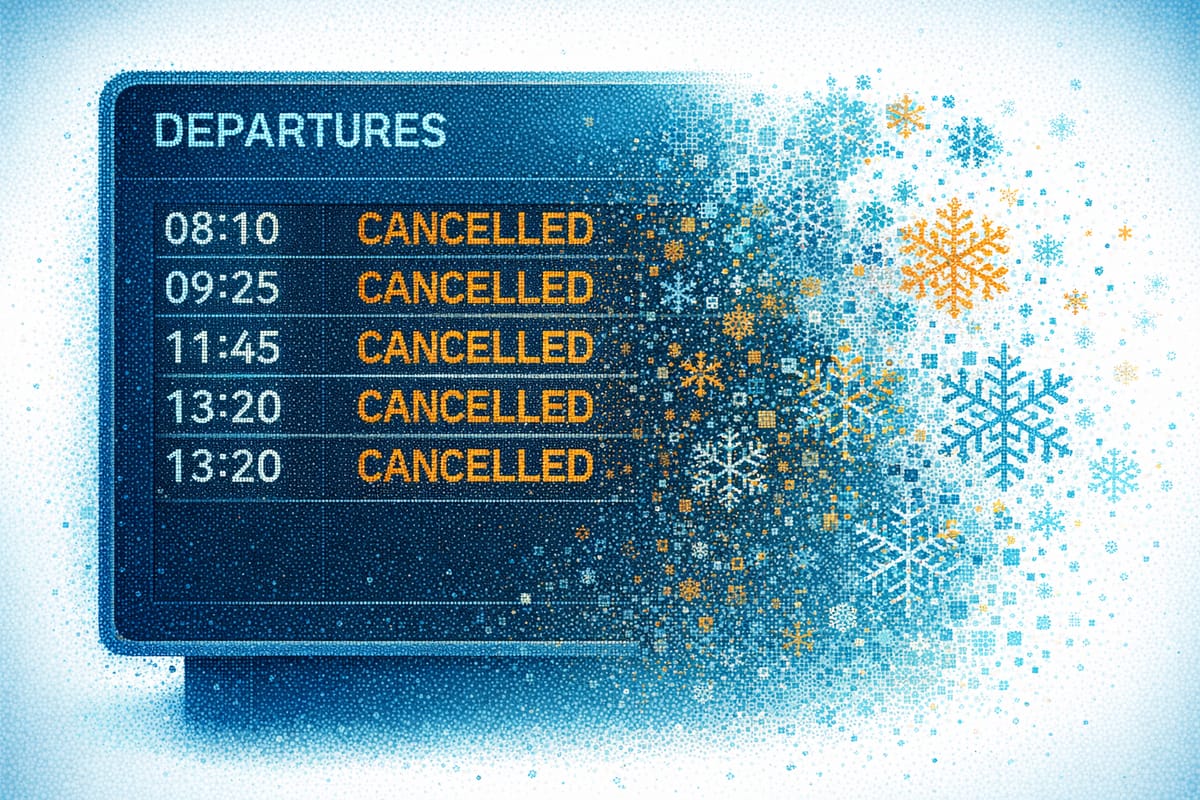
You're flying to close a deal in Chicago tomorrow morning, and the forecast shows eight inches of snow overnight. Your mind races: Will the airline cancel? Should you rebook now? What happens if you're stranded?
These questions hit every business traveler facing winter weather, and the answers aren't obvious. This guide covers when cancellations actually happen, what refunds you're owed, and how to rebook fast enough to still make your meeting.
When Airlines Actually Cancel Flights Due to Snow
Airlines decide to cancel 48-96 hours before winter storms hit, not during the chaos. This advance planning means you often have more warning than you'd think. Delta issued its January 2026 winter storm policy on January 22 for impacts through January 29, a full week's heads-up. Similarly, American and Delta dropped rebooking waivers 48-72 hours ahead of recent storms, while United waived fees for 35 affected airports traveling January 24-26.
Is there a magic snowfall number that triggers cancellations? Nope. According to federal research, decisions about winter flight operations "must be made on a site-specific basis" considering localized operational constraints, safety, and schedule impacts.
That's why location matters so much. Northern hubs like Denver, Chicago, and Minneapolis clear runways faster and stay open longer than Atlanta, Dallas, and Washington Reagan. The difference comes down to preparation: northern airports have the equipment and know-how. Southern ones don't. Book early morning flights to wrap up before operations degrade and deicing crews get overwhelmed.
What You're Owed When Snow Cancels Your Flight
Here's what most travelers miss: you have an absolute right to a cash refund for weather-cancelled flights if you say no to rebooking. The 2024 DOT rule requires airlines to hand over automatic cash refunds when flights get cancelled or significantly changed, no matter the reason, including weather.
Key refund rules:
- Airlines must refund within 7 business days for credit cards, 20 calendar days for other payments
- You get cash back in your original form of payment, not vouchers (unless you want them)
- Accept a rebooking and you lose refund rights, even if the new flight falls through
Weather wreck your timeline? Skip the rebooking and take the cash. Delay manageable? Accept the rebooking, but know refunds are gone once you do.
Premium cards like Chase Sapphire Reserve and Amex Platinum cover hotels, meals, and transportation during certain flight disruptions. This travel credit coverage fills the gap between what airlines owe you and what being stranded actually costs.
How to Monitor Flights Before Weather Hits
Three tools catch disruptions early: airline apps for self-service rebooking, multi-flight trackers for cross-carrier visibility, and weather alerts for the earliest warning signs. Each serves a different purpose in your preparation strategy.
Use Airline Apps for Real-Time Status
Start with your airline's app. American Airline's app shows real-time disruption explanations, lets you rebook yourself during delays, distributes vouchers automatically, and tracks delayed baggage. United Airline's notifications pop up on your lock screen on travel days, so there's no need to keep checking. These are some of the best travel apps for managing disruptions.
Track Multiple Flights Across Carriers
But what if you're juggling three winter trips across different airlines? Checking status on three apps gets old fast. That's where Otto the Agent comes in. It monitors all your flights from the moment you book and alerts you the second delays or cancellations happen.
When things go sideways, Otto shows rebooking options across carriers, so you can pick the one that works and confirm with one tap. Otto also remembers your frequent flyer numbers and applies them automatically, so you're not scrambling during chaos.
Watch Weather Service Warnings and Airport Alerts
Finally, don't ignore official weather sources. When the National Weather Service says "dangerous travel impacts," expect mass flight cancellations, and you've got 2-3 days to prepare. During Winter Storm Fern, for instance, Reagan National Airport warned travelers on its website about widespread cancellations 24-48 hours before the storm hit. When airports post these warnings before weather arrives, take them seriously and make backup plans immediately.
How to Rebook When Cancellations Happen
When cancellations hit, speed is everything. Try multiple rebooking channels at once, because whichever processes first gets you the seat:
- Airline app: 5-15 minute self-service process
- Phone: Call customer service (phone agents sometimes rebook faster)
- Airport counter: Queue in person while calling
- Otto: Shows rebooking options across all carriers; confirm with one tap
Airlines with apps let you rebook yourself without waiting on hold, and you might get a new time or even a nearby airport.
Speed matters during disruptions, but timing matters even more. The real edge comes from acting before cancellations hit, when seats are still available and phone lines are clear.
Tip: Airline fee waivers usually give you 7-14 days to reschedule without fees when bad weather is coming. Move when waivers drop 48-72 hours out, not when cancellations hit, and check partner airlines for alternate routes. Here's the critical part: accepting an airline's rebooking offer means you give up your right to a cash refund if that flight falls through too. That decision is permanent under DOT regulations.
Book Smarter to Avoid Cancellations
Prevention beats scrambling. Three strategies cut your cancellation risk: book during optimal time windows, choose reliable carriers, and avoid risky connections.
Book Late-Morning Flights
Best flight times fall between 9 AM and 3 PM. For winter, aim for late morning, ideally before noon, to stay ahead of afternoon weather that cascades through the day. Better yet, arrive the night before critical meetings to eliminate risk. Skip Monday mornings and Friday afternoons helps too, since airports are packed during these peak travel windows.
Book Delta or Southwest for Winter Reliability
Your airline choice matters more than you think. Southwest Airlines ranks as the most reliable carrier, with fewest cancellations and mishandled bags, plus second-best on-time performance. Delta Air Lines was the only U.S. airline above 80% on-time during July 2024-June 2025.
American Airline's last among major carriers with the highest cancellation rate, second-worst on-time performance. A missed meeting costs way more than the fare difference, so prioritize Delta and Southwest for must-make winter trips.
Avoid Risky Winter Connections
Where you connect matters as much as when you fly. Some airports simply can't handle winter weather well, lacking the equipment and crews to keep runways clear. Connect through these hubs during a storm and you're asking for trouble. Avoid them when you can:
- Dallas-Fort Worth
- Charlotte
- Philadelphia
- Atlanta
- Washington Reagan
Go direct even at premium pricing for critical meetings. If connections are unavoidable, build minimum 2-3 hour buffers during winter and avoid stacking multiple high-risk hubs. Understanding layovers and connections helps you route smarter.
Beat Snow Cancellations Before They Strand You
Now that you understand how winter cancellations work, put this knowledge into action. Set a reminder to check weather forecasts 72 hours before every winter flight. That's your window to act during fee waivers while seats are still open. Before your next winter trip, look up your preferred carriers' on-time record and decide if the fare difference is worth the reliability gap for make-or-break meetings.
For high-stakes travel, build buffers now. Don't hope for the best. Arriving the night before eliminates weather risk entirely. Direct flights through reliable hubs cost more upfront but protect what matters most: showing up prepared for clients.
Want to automate this process? Otto monitors your flights from the moment you book and alerts you instantly when cancellations happen. You review the rebooking options Otto finds across carriers and confirm the one that fits your schedule, finishing in seconds while others scramble through airline websites. Give Otto a shot to skip the rebooking chaos when winter weather disrupts your travel plans.
Frequently Asked Questions
Can I rebook to a different city or airport when snow cancels my flight?
Fee waivers usually limit changes to the same origin and destination cities, but airlines may allow rebooking to nearby airports. Ask about alternatives during rebooking. Changing cities entirely usually means paying fare differences, though Southwest waives these during weather emergencies within their 14-day rebooking window.
How can I quickly find alternative flights that match my schedule and loyalty preferences?
Otto searches across carriers and matches your preferences, including airlines you've flown before and flights that preserve your loyalty earnings. Confirm the option that works with one tap.
Do premium credit cards actually reimburse weather-related expenses that airlines won't cover?
Yes. Trip delay coverage reimburses hotel, meal, and transportation expenses during flight disruptions. This fills the gap since airlines aren't required to cover these costs for weather cancellations. Review your card benefits before travel and save all receipts.
How do airlines handle de-icing delays and crew timeouts in winter weather?
Airlines de-ice aircraft using specialized trucks that apply heated fluids at designated pads. Planes wait their turn, causing delays at busy airports during severe weather. Crew timeouts happen when crews hit maximum duty time, often worsened by de-icing queues. Airlines manage this by reassigning crews or rescheduling flights.
Which airports are most affected by the current US snow storm flight disruptions?
East Coast airports took the biggest hit: Boston Logan (296 cancellations), Newark (over 40% of flights canceled), and New York's JFK and LaGuardia. Atlanta, North Carolina, Texas, and Washington Dulles also faced significant disruptions. The storm caused over 12,000 cancellations or delays nationwide.