B2B Travel Solutions Compared: Choosing the Right Platform for Your Company
Compare 7 B2B travel solutions by category. Find the right fit for your booking style, whether you need faster search, expense automation, or trip monitoring.


Last month you spent your Sunday evening hunting for a decent hotel near a client's office in Austin, toggling between three browser tabs, a loyalty app, and a shared spreadsheet your team uses to track travel budgets. By the time you found something in policy, the rate had changed. That's what business travel looks like when your company doesn't have a dedicated platform handling it for you.
This guide breaks B2B travel solutions into 7 categories, compares platforms like SAP Concur, Navan, Perk (formerly TravelPerk), and Otto the Agent side by side, and shows which type fits the way you book so you can spend less time on repeat travel admin.
What Are B2B Travel Solutions?
B2B travel solutions are platforms built for what you actually deal with on work trips: booking flights, managing itineraries, travel expenses, and staying within company travel policies. Unlike consumer sites that chase the lowest price and push vacation packages, these tools connect booking, expense, and policy workflows, and some remember your preferences between trips.
Business travel is a major operating expense, yet many professionals at small businesses still book without a formal travel management company. That gap means piecing together trips on consumer booking sites, manually filing expense reports, and handling disruptions alone. B2B travel solutions close that gap, whether you're a consultant flying weekly, a startup team managing its own bookings, or a traveler coordinating recurring trips without dedicated support.
Key Features to Look for in B2B Travel Software
The features below show whether a platform cuts booking work or just gives you one more login to remember. Not every tool covers all of them, so focus on the ones that matter most for the way you travel.
- Centralized Booking. One place to search flights, hotels, and ground transport instead of toggling between airline sites, hotel apps, and OTAs. The best tools pull from multiple suppliers so you see real-time pricing and availability in one view.
- Travel Policy Enforcement. Strong platforms flag out-of-policy options before you book, not after your expense report gets rejected. That keeps you compliant without memorizing a policy template.
- Expense Management Integration. The most useful tools auto-generate receipts, tag charges to the right project, and connect to accounting software so finance stops chasing missing PDFs.
- Traveler Safety and Duty of Care. Duty of care features send alerts when storms or strikes affect your route and give you direct channels to reach help during emergencies. That covers pre-trip risk checks, traveler alerts, and emergency response tied to travel risks.
- Disruption Management. Look for platforms that monitor your itinerary in real time and show alternate options before you're stuck on hold with the airline.
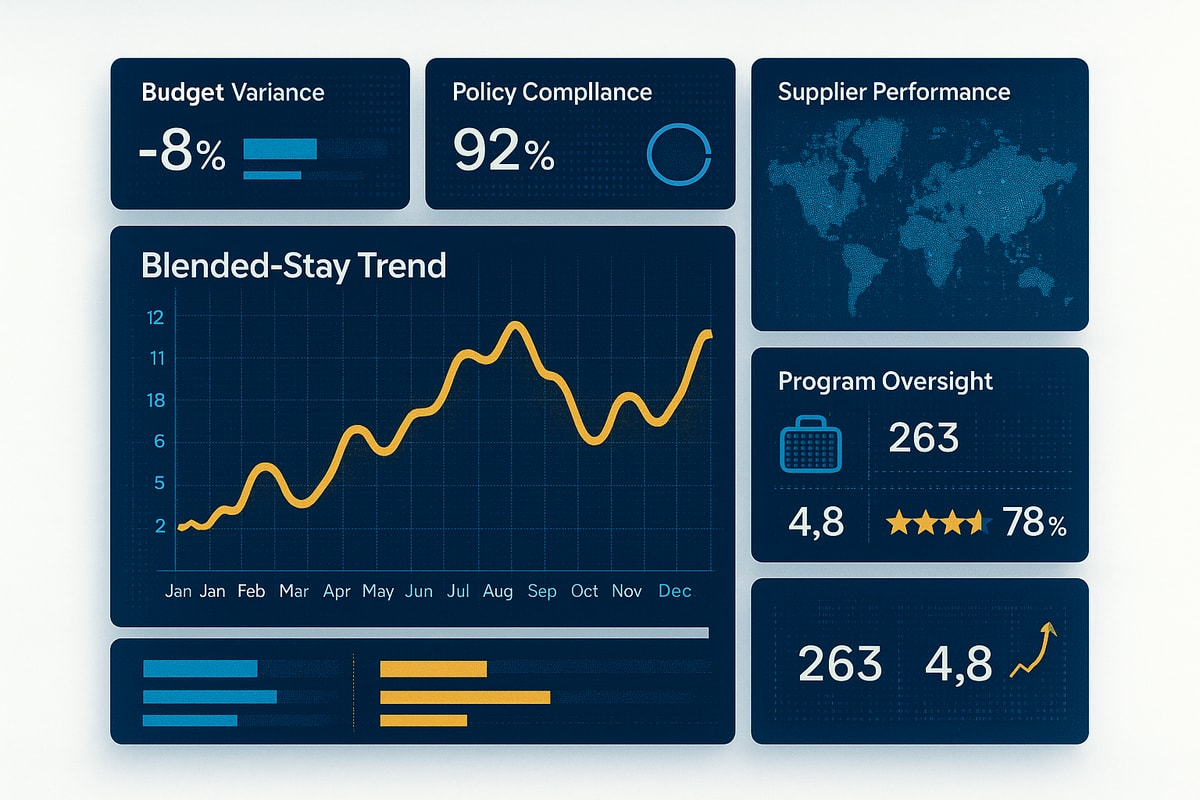
- Reporting and Spend Visibility. Structured spend reports let teams spot spending patterns instead of rebuilding them after the fact.
- Preference Memory and Loyalty Tracking. Frequent flyer numbers, hotel rewards, seat preferences, and airline choices should carry over between bookings automatically.
This mix matters because most travelers at smaller companies don't need every feature. They need the right combination for the part of travel that keeps wasting time.
How B2B Travel Solutions Compare by Category
Different tools fix different headaches on the road. Some keep you inside policy, while others cut search time, cover international trips, or clean up the receipt mess after you get home. Use these categories to match the tool to the problem that keeps slowing you down.
1. Enterprise Compliance Platforms
These systems connect booking, expense tracking, policy enforcement, and financial reporting in one environment. SAP Concur is the most recognized name here. If you travel inside a large company, you've probably seen one of these.
The upside: bookings stay compliant and expenses get captured without extra effort on your part. The trade-off: implementation time and complexity. These platforms are designed for companies with dedicated IT and finance teams. If you're at a small company booking your own trips, you'll likely spend more time waiting on setup than you save on any individual booking.
2. Mid-Market Travel and Expense Platforms
If you've outgrown consumer booking sites but don't have the infrastructure for an enterprise system, this category combines booking and expense tracking in one place. Navan and Perk (formerly TravelPerk) are two well-known platforms in this space. They combine search, booking, and reimbursement in one workflow, so you spend less time toggling between tools.
The catch is rollout. These platforms still need someone on your team to handle setup and get everyone onboard. That's a stretch if you're a solo traveler or part of a very small team without a dedicated ops person.
3. Corporate Booking Portals
Sometimes the booking experience itself is the bottleneck. Corporate booking platforms pull flights, hotels, and transfers from multiple suppliers into one search and support approval workflows.
Instead of opening multiple browser tabs to compare options, you search once and see everything in a single view. That fixes the search problem, but you may still need a separate tool for expense reporting and reimbursement.
4. Global Travel Program Platforms
If your trips regularly cross borders, you need a platform that handles multiple countries and currencies without extra friction. These platforms are built for international travel programs and give you one place to search flight and hotel options across regions.
If most of your trips are domestic flights to the same few cities, that global infrastructure is more than you need. The added complexity creates extra steps without adding much value.
5. Duty of Care and Risk Management Platforms
If you travel to regions with political instability, extreme weather risk, or limited infrastructure, safety moves from a nice-to-have to an employer obligation. Platforms in this category send destination alerts, flag trip risks, and give travelers a way to get help during emergencies.
Mostly domestic day trips? You probably don't need a tool built around this problem. But if conditions change quickly where you travel, direct support matters.
6. Expense Automation Tools
Some travelers don't need a better way to book. They need a better way to deal with the aftermath.
If you spend hours after every trip assembling receipts and filling out reimbursement forms, expense automation tools tackle that pain directly. They cut down the post-trip paperwork, but they don't touch the booking problem. You'll still need a separate tool to find and reserve flights and hotels.
7. AI Travel Assistants
For unmanaged business travel, another option is an AI travel assistant built around repeat bookings, stored preferences, and disruption support. These tools remember your preferences, curate a short list of options, book flights and hotels through one interface, monitor trips, and keep loyalty details attached.
That makes this category a fit when your main problem is repeated booking work, not enterprise rollout. If you're booking the same kinds of trips over and over, a tool here can cut down the repeat search and data entry that make self-booked travel so time-consuming.
How SAP Concur, Navan, Perk, and Otto Compare
The categories above show what each type of tool solves. But if you're evaluating specific platforms, you need to know how the most commonly compared options actually stack up. Here's how four well-known B2B travel platforms differ on the dimensions that matter most.
SAP Concur
Best for: Large enterprises that need deep ERP integration, global compliance, and financial reporting across departments.
SAP Concur is the legacy leader in travel and expense management. It connects travel booking, expense reporting, invoice processing, and policy enforcement inside the broader SAP ecosystem. Its strength is enterprise-grade compliance, audit trails, and integration with SAP S/4HANA and other ERP systems. In 2024, it introduced AI-powered flight recommendations and a redesigned invoice interface.
Pricing: Custom enterprise quotes based on modules and company size, with published plans starting around $9 per user per month for basic expense functionality. Implementation costs add up, and the platform typically requires a minimum number of users.
Trade-offs for smaller companies: Setup complexity is high. The platform is modular, so you may need Concur Travel, Concur Expense, and Concur Invoice as separate purchases. User reviews consistently call it powerful but heavyweight for small teams, with some flagging slow customer support and a dated interface.
Navan (formerly TripActions)
Best for: Mid-market companies (50–300+ employees) that want a modern, all-in-one travel and expense platform with a consumer-grade interface.
Navan combines travel booking, expense management, and a corporate card program in one platform. It rewards employees who book below budget through its Navan Rewards program, which creates spend-saving incentives without extra admin. Navan also recently launched Navan Edge, a personal assistant for frequent travelers that speeds up booking and managing flights, hotels, and dining.
Pricing: Travel booking is commission-funded and free for companies with up to 300 employees. Expense management is $15 per user per month after the first 5 free users. Enterprise pricing requires a custom quote.
Trade-offs for smaller companies: The free tier is generous, but some users report that travel prices on Navan run higher than booking directly. The platform is designed around a managed program, so solo travelers or very small teams may not use enough features to justify onboarding. Enterprise pricing requires a sales process.
Perk (formerly TravelPerk)
Best for: Growing SMBs and mid-market companies that prioritize user-friendly booking, 24/7 support, and flexible cancellation.
TravelPerk rebranded to Perk in November 2025 and acquired Yokoy to add AI-powered expense and invoice management alongside its core travel booking platform. Perk offers access to a large travel inventory, 24/7 customer support, and FlexiPerk for flexible cancellations. The platform uses a hybrid pricing model of flat monthly fees plus per-booking fees.
Pricing: Starter plan is free with a 5% per-booking fee (capped at $30). Premium is $99/month plus 3% per booking. Pro is $299/month plus 3% per booking. North American plans allow unlimited users with no per-seat fees.
Trade-offs for smaller companies: Per-booking fees add up for frequent travelers. Some user reviews mention that the platform can feel like more than smaller teams need, and that prices don't always match what you'd find booking directly. The expense management features are newer (via the Yokoy acquisition) and still being integrated.
Otto the Agent
Best for: Solo business travelers and small-to-medium teams with unmanaged travel who need to reduce repeat booking work without rolling out a company-wide platform.
Otto is an AI travel assistant purpose-built for the repeat-booking problem. Instead of surfacing hundreds of results or requiring a managed program, Otto remembers your airline, hotel, seat, and loyalty preferences, curates a short list of options, books flights and hotels, and monitors trips to surface rebooking alternatives when disruptions happen. It completes full travel transactions without redirecting you to other websites or making you re-enter personal information. Otto also ingests your company's travel policy, so it flags in-policy vs. out-of-policy options with explanations before you book. It's built for travelers who book their own trips and want the process to get faster over time, not for companies building a full travel program.
Pricing: Commission-based, funded by airline and hotel commissions on completed bookings. Otto is free for travelers to use for 12 months, which eliminates the upfront cost barrier.
Trade-offs: Otto is not built for enterprise-wide compliance reporting or multi-department spend management. If you need audit trails across departments or centralized expense workflows, an enterprise or mid-market platform is a better fit. Otto's strength is specific: cutting the repeated search, preference entry, and disruption management work that makes self-booked travel slow, while keeping individual travelers inside policy.
Quick Comparison by Platform
Here's how the four platforms compare across the dimensions that come up most when choosing between them.
SAP Concur
- Primary focus: Enterprise T&E compliance
- Best company size: 100+ employees
- Setup complexity: High (IT + finance teams)
- Expense management: Deep (core feature)
- Policy enforcement: Enterprise-grade
- Preference memory: Profile-based
- Disruption support: Via TMC partner
- Pricing model: Per-user subscription
- Loyalty tracking: Yes (profile-based)
Navan
- Primary focus: All-in-one travel + expense + card
- Best company size: 50–300+ employees
- Setup complexity: Medium (team onboarding)
- Expense management: Included ($15/user/mo after 5 free)
- Policy enforcement: Built-in
- Preference memory: Profile-based
- Disruption support: Agent + AI support
- Pricing model: Commission-funded travel (free ≤300 employees) + per-user expense fees
- Loyalty tracking: Yes (+ Navan Rewards)
Perk (formerly TravelPerk)
- Primary focus: Travel booking + spend management
- Best company size: 10–500+ employees
- Setup complexity: Low–Medium
- Expense management: Via Yokoy acquisition
- Policy enforcement: Built-in
- Preference memory: Profile-based
- Disruption support: 24/7 human support
- Pricing model: Monthly fee + per-booking fee
- Loyalty tracking: Yes
Otto
- Primary focus: Repeat booking + disruption support
- Best company size: Solo to small/mid teams
- Setup complexity: Minimal (individual setup)
- Expense management: Provides and stores the booking receipts automatically
- Policy enforcement: Policy-aware (flags in-policy vs. out-of-policy options)
- Preference memory: Core differentiator (AI-driven)
- Disruption support: Proactive monitoring + rebooking
- Pricing model: Free for travellers for 12 months
- Loyalty tracking: Auto-attached to every booking
The four platforms solve different problems. SAP Concur has the deepest enterprise compliance feature set. Navan and Perk compete directly for mid-sized teams that want a modern all-in-one. And if your main problem is repeating the same booking work on your own, Otto is purpose-built for that.
How B2B Travel Solutions Differ from Consumer Booking Sites
Consumer sites like Expedia and Booking.com are built to sell vacations. That difference matters when you're booking a business trip, because your trip is tied to policy, reimbursement, and schedule risk, not just price.
The biggest gaps show up fast:
- Consumer sites don't enforce travel policies, so you won't know a booking violates company rules until your expense report bounces back.
- They don't connect to accounting software, which turns every receipt into a manual upload.
- When you're dealing with flight alternatives, they leave you to navigate the airline's rebooking process alone.
- They don't keep business-travel preferences at the center of the search, so repeat trips start from scratch every time.
B2B tools put booking, policy, and expense steps into the same trip flow instead of treating the trip like a one-time purchase. That means in-policy options show up earlier, expense data moves into reimbursement workflows, and disruption support starts while you're still traveling.
How to Choose the Right B2B Travel Solution
The right tool depends on your trip volume and which part of the process wastes the most time. If you're booking your own travel at a smaller company, the goal is usually simple: cut repeat work and reduce disruption risk.
If you're a solo traveler or part of a small-to-medium business without a travel manager
Skip the enterprise platforms. Your main problem is usually repeated searches and handling disruptions on your own. Otto is the strongest match here because it handles the full booking-to-disruption cycle for individual travelers without requiring company-wide rollout or team onboarding.
If you need a managed program for a growing team (50–300 employees)
Navan and Perk both combine booking, expense, and policy management in one platform. Navan's travel booking is free for companies under 300 employees (commission-funded), while Perk uses a flat monthly fee plus per-booking charges. Both require team onboarding but offer a faster path than enterprise systems like SAP Concur.
If your biggest problem is expense reporting, not booking
Start with an expense-first tool. Platforms that auto-capture receipts and pre-populate reports save more time than a better booking engine if your team already knows which flights to take.
If your company sends people across multiple countries
Pick a tool that handles policy checks, duty of care tracking, and broad international inventory. SAP Concur and Perk both have strong global coverage. If you book your own international trips often, the extra setup pays off because the tool covers the complexity that shows up once you cross borders.
If disruptions are costing you meetings and productivity
Prioritize tools with proactive monitoring. A platform that shows you rebooking options before you even realize your connection options matter can save more time than one that only offers cheaper flights.
Common Pricing Models for B2B Travel Software
Most B2B travel platforms use one of three pricing models. The right one depends on whether your travel volume is steady, occasional, or unpredictable.
- Subscription pricing. A flat monthly fee or per-user monthly rate. Works best with predictable travel volumes, but you're paying even in lighter months. SAP Concur and Navan's expense tier both use this model.
- Transaction-based pricing. A fee each time someone books. Costs stay tied to actual travel activity, though per-booking charges stack up for frequent travelers. Perk uses a hybrid version with a flat monthly platform fee plus a percentage per booking.
- Commission-based pricing. The platform earns revenue from airline and hotel commissions on completed bookings, so the traveler pays nothing directly. Otto uses this model and is free to the customer for 12 months. Navan also uses commissions to fund its free travel booking tier.
Stop Repeating the Same Booking Work
The main problem with business travel at smaller companies isn't a lack of options. It's the repeated work: searching the same routes, re-entering the same loyalty details, and scrambling when plans change. Once you know which category solves which problem, picking the right tool gets straightforward.
Platforms like SAP Concur, Navan, and Perk solve this at the company level with managed programs and policy enforcement. But if you book your own trips and don't need a company-wide rollout, Otto tackles that repeat-work problem at the individual level. It gets faster with every booking you make, and it keeps working for you between trips by monitoring flights and surfacing alternatives before disruptions derail your schedule.
Set up Otto to book faster with remembered preferences and proactive trip monitoring.
FAQ
What is a B2B travel solution?
A B2B travel solution is software built for business professionals to book flights and hotels, enforce company travel policies, track expenses, and manage trip changes in one platform. Unlike consumer booking sites designed for vacation planning, B2B tools connect to expense systems, remember traveler preferences, and support you when disruptions happen.
How do B2B travel solutions save money compared to booking directly?
These platforms control spend by showing in-policy options before you book, cutting manual errors, and giving finance teams visibility into travel spend by team, project, or traveler so budget decisions are based on actual data.
How can I book business trips faster without re-entering preferences every time?
AI travel assistants remember your airline, hotel, seat, and loyalty program preferences automatically and apply them to new searches. Otto, for example, learns from your past travel choices and applies them to every new booking so you don't start from scratch each time.
Do small businesses need B2B travel software?
Small businesses that send employees on recurring trips often benefit from dedicated travel tools. The time saved on booking, expense reporting, and disruption management adds up fast, especially when the alternative is juggling consumer sites and manual admin.