How Does a Layover Work? A 2026 Guide for Business Travelers
How does a layover work? You change planes at an intermediate airport, but security, baggage, and timing depend on your ticket and route. Here's what to know.


Updated May 2026
TL;DR: How does a layover work? You land at an intermediate airport, check the monitors for your next gate, walk to the connecting aircraft, and board for the second leg of your trip. On a single-ticket booking, the airline transfers your checked bags automatically and owns the connection. On separate tickets, you may need to claim bags, leave security, and re-check in with the second airline. International arrivals usually require customs and TSA re-screening either way.
Your flight lands in Dallas. Your connection to Phoenix boards less than an hour later. You stay airside, the airline moves your bags on a single-ticket booking, and Dallas's layout gives you a real shot at the gate. That's how a layover works when ticket type, airport layout, and connection time line up in your favor.
This guide covers four things: what happens during a layover, how security and baggage transfers work between connecting flights, how much minimum connection time you actually need, and booking strategies that cut your risk when delays hit.
How Does a Layover Work?
A layover is a scheduled stop at an intermediate airport between flights on the way to your destination. The connecting flight is the second leg you're waiting for. The layover is the time between flights. For domestic travel, layovers usually run under four hours, and anything longer counts as a stopover. For international travel, the threshold is 24 hours.
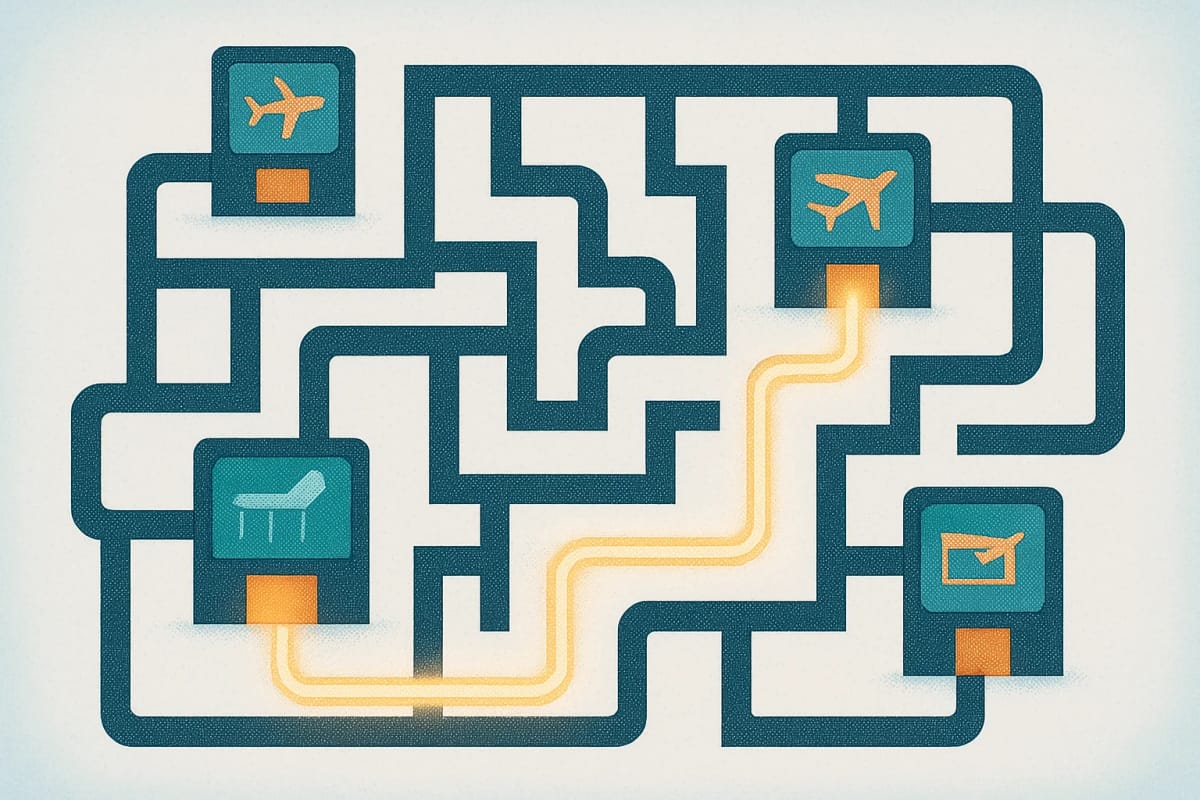
How your connection works depends first on your ticket type, because that decides who carries the risk if the first flight slips. On a single-ticket booking, airline carriage rules set connection standards that keep airlines from selling impossible itineraries, so in practice you land, deplane, check the monitors or app for your next gate, follow the connections signs, and walk to the next aircraft while bags move automatically.
Separate tickets flip that process, and the risk goes up fast. You may need to claim bags, leave security, check in again with the second airline, recheck luggage, and clear TSA again. If the first flight runs late and you miss the second, that airline may owe you nothing, leaving you to work through missed connection steps on your own. When you book a connecting itinerary through Otto, the booking goes through as a single ticket so the airline owns the handoff.
For business travelers, the line between a layover and a stopover matters too. A stopover is an intentional break long enough to leave the airport, sleep, and maybe take a meeting in the connecting city. If your connection pushes past 24 hours, treat it like an overnight trip and budget accordingly.
Security and Baggage: What You Touch and What You Don't
What you hit in the middle of a trip depends on your routing and whether you're crossing a border. These are the situations that matter most when you're trying to make a connection without losing time.
Domestic-to-Domestic Connections
You usually stay airside and skip security, walking from one gate to the next inside the secure zone. At large hubs, that may include a train ride between terminals.
Terminal changes are the main exception. At airports like Dallas/Fort Worth, trains connect terminals without leaving the secure area. At others like New York's JFK, moving between certain terminals can require exiting and re-clearing TSA. Because of that, check the airport map before booking a tight connection that depends on a terminal change.
International-to-Domestic Connections
This process runs slower because customs resets the trip. You typically claim checked baggage after immigration, carry it through customs, and recheck it for your domestic connection. You also clear TSA again, so this is where short connections get risky fast.
Programs Changing How International Layovers Work
Two pilot programs are reshaping international connections at select US airports. CBP's International Remote Baggage Screening (IRBS) screens checked bags at the overseas airport and sends the images to CBP during your flight. If the bags clear, they move straight to your domestic connection without the usual claim-and-recheck step. The pilot launched with American Airlines arrivals into Los Angeles, then expanded to United Airlines arrivals into San Francisco and select arrivals into Atlanta.
TSA's One-Stop Security (OSS) program goes further by also exempting some arriving passengers from TSA re-screening at the connecting airport. The pilot started in July 2025 with American Airlines arrivals into Dallas/Fort Worth and Delta Air Lines arrivals into Atlanta.
How Much Connection Time Do You Actually Need?
Published minimum connection times are hard to find, and the time you actually need shifts by airport, airline, terminal, and route. Don't chase the published minimum. What matters is how long this airport and this connection usually take, especially when a client meeting is on the line.
For most large US hubs, give yourself at least 60 to 90 minutes for a domestic connection and 90 minutes to two hours for an international-to-domestic connection. Add more if you're changing terminals, clearing customs, or flying through bad weather. If the meeting really matters, build in extra buffer instead of trying to beat the clock.
The same thinking applies to your calendar. Schedule meetings at least two to three hours after expected arrival, or better yet, fly in the night before. Knowing the common delay causes on your route helps you spot where extra buffer matters most. If your inbound flight delays and you miss your connection on a single-ticket booking, the airline will usually rebook you on the next available flight at no extra charge, and you can ask about rerouting through a different hub if that gets you there sooner. Bigger disruptions push you into full flight rebooking territory, where the choices get harder fast. For trips booked through Otto, Otto suggests rebooking options when disruptions happen and asks you to confirm significant changes, so you pick a path forward instead of standing in line at the service desk.
Booking Connecting Flights That Actually Work
Direct flights kill connection risk entirely. When you can't avoid a layover, on-time performance and hub layout decide your odds. Pick a hub with a strong on-time record, and the rest of these tactics get easier.
- Pick more forgiving hubs. Some airports handle tight connections better than others, especially when terminals connect airside and you don't need to reclear security.
- Avoid peak disruption periods. Summer storms and winter weather both trigger cascading delays. Season matters as much as airport.
- Book morning connections. Delays pile up through the day. Earlier flights face fewer knock-on problems.
- Book through a tool that watches the trip. When disruptions hit a trip booked through a tool, it monitors flight status, suggests rebooking options, and asks you to confirm significant changes before rebooking, so you have a Plan B in hand before the gate agent makes the announcement.
- Lock in your loyalty numbers and preferences. Priority rebooking and standby priority can matter when a tight connection falls apart, and Otto stores your airline loyalty numbers and travel preferences, then auto-applies them to every booking so the status you've earned counts and the options you see already match how you travel.
Book Layovers That Hold Up When Flights Slip
Now that you know how a layover works, the practical answer comes down to ticket structure, airport layout, and what happens when your first flight slips. Once you know when bags transfer automatically, when customs resets the process, and when separate tickets leave you exposed, you can book connections that match the stakes of the trip.
That matters even more in unmanaged business travel, where you're the one dealing with a gate change, a missed connection, and a meeting that won't move. Otto handles the booking, watches the inbound flight, and suggests alternative options the moment a delay threatens your connection, so you can confirm a Plan B before the gate agent makes the announcement.
Start with Otto to get backup flight options before a missed connection derails your trip.
FAQ
How does a layover work on a single ticket vs. separate tickets?
On a single-ticket booking, the airline owns the connection: bags transfer automatically, and if the first flight runs late, the carrier rebooks you on the next available flight at no extra charge. On separate tickets, you handle the handoff yourself by claiming bags, checking in again with the second airline, and re-clearing TSA. If you miss the second flight because the first was delayed, the second airline may not owe you anything, which is why single-ticket itineraries are the safer pick for business trips.
Do you have to go through security again during a layover?
On domestic-to-domestic connections, you usually stay inside the secure area and skip TSA. International arrivals connecting to domestic flights usually require security again after customs. Some domestic terminal changes also force you to exit and re-enter security, which is why checking the airport map matters before you book a tight connection.
Do you have to switch planes during a layover?
Usually, yes. You deplane from your first aircraft, check your next gate, and board a connecting flight from there. Sometimes the same aircraft continues onward, but you should still follow the airline's connection instructions. Gate changes, terminal changes, and timing still matter, so plan for a normal connection instead of assuming you'll stay seated.
Can you leave the airport during a long layover?
Yes, if you have enough time to get back through security and make boarding. A long domestic layover gives you more flexibility than a tight connection. But if the schedule is close, the airport is unfamiliar, or the meeting matters, staying airside is usually the safer choice.
How can you get backup options before a missed connection turns into a bigger problem?
If you wait until you're standing at the gate, your choices usually get worse because other passengers are chasing the same seats. For trips booked through Otto, Otto monitors flight status and suggests rebooking options when disruptions happen, so you can confirm a Plan B before the gate agent makes the announcement.