What Are Accommodations in Travel? Business Guide
Learn what accommodations mean in business travel, types of lodging options, essential amenities, and how to choose the right hotel for your trip profile.


Your expense report just got rejected because the hotel was $12 over the nightly cap. Now you're on the phone with finance, explaining why the only policy-compliant option was 40 minutes from your meeting location. Nobody trained you on what "accommodations" actually means in your company's travel policy, but you're expected to get it right every time.
Understanding what counts as "accommodations" and how to choose the right type for your trip eliminates most of that confusion. This guide breaks down accommodation categories, the amenities that actually matter for business travel, and how to match your lodging choice to your trip profile.
What Are Accommodations in Travel?
Accommodations are anywhere you stay overnight during a trip. The term covers everything from budget motels to luxury hotels, and it's separate from flights, ground transportation, or activities.
In business travel, the definition gets narrower. When your policy says "accommodations must not exceed $200 per night," that cap only applies to hotel lodging costs, not flights, rental cars, or total daily expenses. This matters because each component has its own booking process, policy limits, and expense reporting rules.
Otto the Agent learns what you prefer and what your company allows, then shows you a handful of curated options instead of hundreds.
Why Business Accommodations Are Different from Leisure Hotels
Leisure travelers hunt for deals near attractions. Business travelers need something else entirely: flexibility, productivity-friendly amenities, and proximity to work.
Flexibility comes first. Eighty-eight percent of travelers report forced last-minute changes from unexpected delays and cancellations. That upfront savings on a non-refundable rate vanishes when your meeting gets rescheduled or your flight gets cancelled.
Location priorities flip too. You're picking hotels based on distance to client offices and meeting venues, not beaches or downtown nightlife. A hotel ten minutes from your 8 AM presentation beats a trendy spot 45 minutes away.
Types of Business Travel Accommodations
Your trip length and work requirements determine which accommodation type fits best.
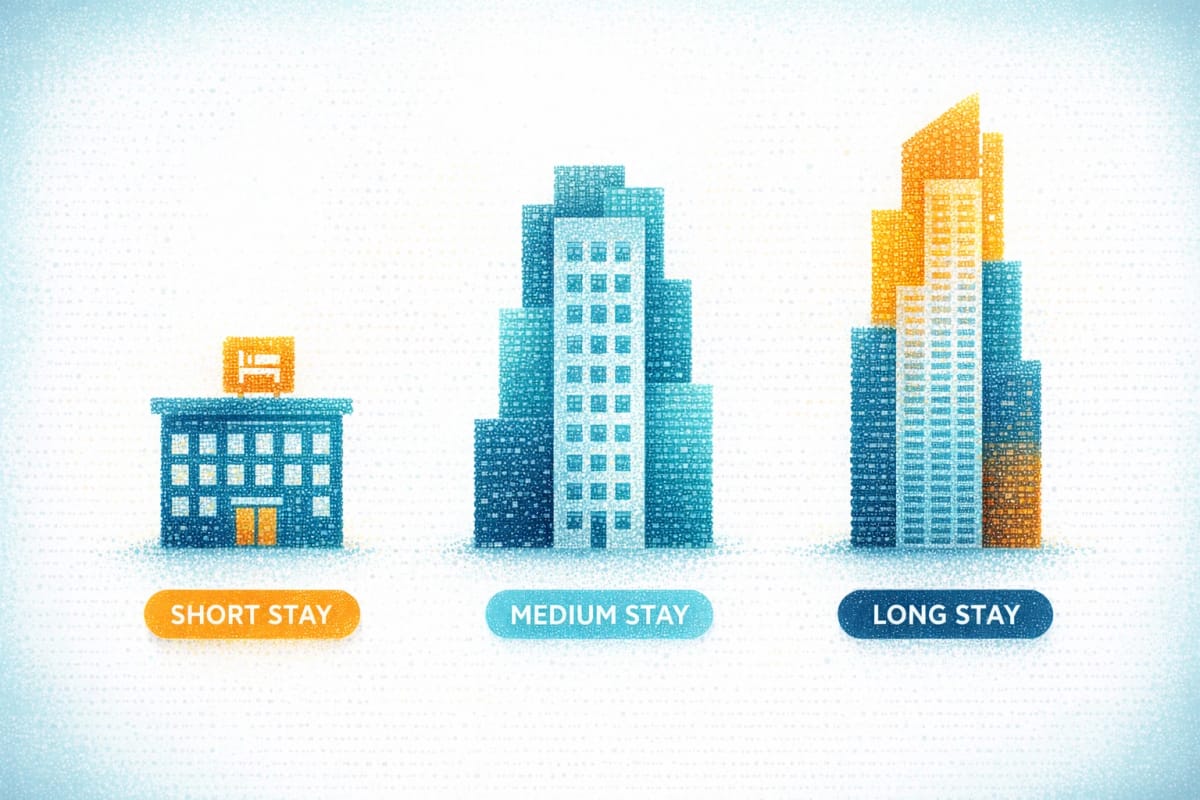
Budget Hotels (1-3 Night Trips)
Budget chains work for basic overnight stays with minimal amenities. These suit trips where you're just sleeping between meetings with no in-room work needs. Expect clean rooms and basic WiFi, but don't count on ergonomic workspaces or reliable video conferencing.
Mid-Range Business Hotels (3-7 Night Trips)
Most business travelers land here for typical stays, balancing cost with workspace and WiFi. You'll find functional desks, reliable internet for email and basic calls, and on-site dining.
Business-Class Properties (High-Intensity Work Trips)
Business hotels deliver high-performance connectivity for video conferencing, ergonomic workspaces, and meeting rooms for client-facing work. Pick these when your trip involves heavy video calls or client presentations. Luxury hotels for business add perks like executive lounges and premium service.
Extended Stay Options (7+ Night Trips)
For trips over 7 nights, extended stay properties save money through full kitchens, separate living areas, and laundry facilities. Kitchen access cuts meal expenses significantly over week-long stays.
Essential Amenities That Actually Matter
Four amenities make or break a productive business trip:
- High-speed WiFi that actually works. Hotels advertise WiFi without bandwidth specs. Verify actual speeds before booking if you're running video conferences.
- Proximity to meetings. A hotel costing more per night but walkable to meeting locations can cost less overall once you factor in daily transportation.
- Flexible check-in times accommodate your meeting schedule when your first client meeting starts at 7 AM or you land at 11 PM.
- On-site dining for early departures gets you fed when meetings start at 8 AM. Confirm breakfast hours and grab-and-go options.
How to Choose Based on Your Trip Profile
The right accommodation depends mostly on how long you'll be traveling. Short trips of three nights or fewer rarely justify premium properties. Budget chains give you clean rooms and basic connectivity that handle most overnight needs. When your schedule includes video calls, mid-range hotels offer the workspaces and reliable internet that budget options lack.
Longer trips shift the math toward location. If you're spending three to seven nights with multiple daily meetings, proximity to those meetings matters more than amenities. A walkable property beats a luxury hotel that puts you in rideshares twice a day.
Once your trip stretches beyond a week, look at extended stay properties instead of traditional hotels. Full kitchens cut meal expenses, separate living areas prevent cabin fever, and a real workspace makes long assignments more productive.
Regardless of trip length, check your booking against company policy before confirming. Your travel policy defines what you can book, and violations often mean expense report rejection.
Common Booking Mistakes That Cost You Money
Business travelers keep making the same costly errors, and most come from prioritizing the wrong factors when booking.
Choosing Non-Refundable Rates Without Risk Assessment
The refundable versus non-refundable decision trips up even experienced road warriors. Non-refundable rates look tempting when you're trying to stay under budget, but business schedules change constantly. A single cancelled meeting can turn your $30 savings into a $200 loss when you forfeit the reservation and book again at current rates.
Ignoring Total Location Costs
Location math misleads travelers who focus only on nightly rates. That hotel advertising rooms for $40 less may sit 45 minutes from your meetings. Two rideshares per day quickly eat up your nightly savings, and you lose productive hours sitting in traffic. Smart booking means comparing total trip costs, not just room rates, factoring in transportation, parking, and your time.
Overlooking Hidden Fees
Hidden fees are another constant headache. The rate you see during booking rarely matches what you'll actually pay. Resort fees, parking charges, and mandatory amenity surcharges can inflate your final bill by 20-30% beyond the advertised price. Hotels won't make these costs obvious, so ask for the all-in nightly rate before confirming any reservation. Managing travel expenses means knowing what you'll actually owe.
Assuming Amenities Will Meet Your Needs
The final common mistake is assuming amenities will work without checking. Hotel marketing language like "free WiFi" and "business center" sounds reassuring but tells you nothing about actual quality. WiFi that handles email may crash during video conferences. Desks built for signing checks may wreck your back during four-hour work sessions. When specific amenities matter for your productivity, confirm the details directly instead of trusting generic descriptions.
Make Business Accommodation Decisions Faster
Finding the right hotel has become a chore that repeats every single trip. Between comparing rates across multiple tabs, checking policy compliance, calculating total location costs, and verifying amenities, the process eats up time you could spend preparing for actual work.
Otto cuts out the busywork. It learns your preferences and your company's travel policy, then shows you options that already match your meeting location, budget cap, and amenity needs. Try Otto to book your next hotel in under a minute.
Frequently Asked Questions
What's the difference between accommodations and broader travel services?
"Accommodations" refers specifically to hotels and overnight stays. "Travel services" covers flights, hotels, and transportation combined.
How far in advance should I book business travel accommodations?
Book 21-30 days before arrival for the best pricing and availability. Avoid booking within 7 days when possible since last-minute rates jump significantly.
Should I choose refundable or non-refundable hotel rates?
Go with refundable rates when your trip involves uncertain client meetings or schedules that could shift. Non-refundable savings vanish with a single cancellation.
How can I quickly find hotels that match my company's travel policy?
Your company sets rate caps, preferred suppliers, and advance booking timelines. About two-thirds of companies require pre-trip approval for international business travel. Otto can ingest your corporate travel policy and show "within policy" vs "out of policy" indicators on hotel options.
Do hotel loyalty programs matter for business travelers?
Loyalty programs deliver real value through complimentary upgrades, waived change fees, and elite status benefits. Stick to 1-2 preferred programs aligned to your actual routes.