Ultimate Business Travel Packing Checklist
Pack faster, travel carry-on only, and show up ready. This business travel packing list covers wardrobe, tech, organization, and documents.


Two trips a week, every week, and you're still digging through your suitcase at midnight looking for a phone charger you're 80% sure you packed. Frequent travel should make packing automatic, but most road warriors waste time re-deciding what to bring every single trip.
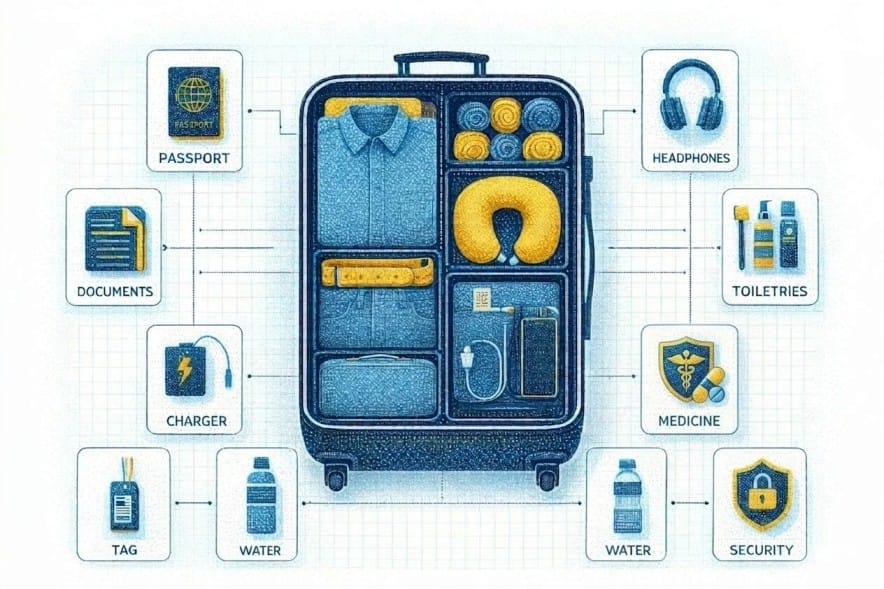
This business travel packing list covers 33 items across six categories, from tech and clothing to toiletries, organization, documents, and travel extras, that keep every trip carry-on only. Pack these, and you'll show up looking like you didn't just sprint through a connecting terminal.
Tech and Productivity
Your tech kit is your safety net on the road. The right travel tech picks come down to one thing: you can't afford to be hunting for outlets, replacing cables, or realizing mid-trip that your gear can't keep up.
1. Laptop and charger: Non-negotiable. Protect it with luggage that has a dedicated laptop compartment or a bag with a padded sleeve. A cracked screen on day one turns a business trip into a disaster.
2. High-wattage power bank (87W+, 25,600mAh): Standard 45W banks can't keep up with a laptop under load, so they'll die on you right when you need them during a long layover. A high-wattage bank keeps your laptop and phone topped off without chaining you to a wall outlet.
3. Multi-port USB-C charger: One charger, one outlet, three devices. Critical in gate areas where outlets are contested, and it means you stop carrying separate wall plugs for your phone, laptop, and headphones.
4. Noise-canceling headphones: Video call from a hotel room, screaming kid two rows back on a flight, noisy terminal gate. Noise-canceling headphones earn their bag space every single trip.
5. Mobile hotspot or tethering plan: Hotel and airport Wi-Fi is slow, unreliable, and insecure. Bad bet for anything involving company data. A dedicated hotspot keeps you on a fast, private connection anywhere, including convention centers where hundreds of users tank the shared network.
6. External webcam: Your laptop's built-in camera sits below eye level, uses a tiny sensor, and falls apart in dim hotel lighting. An external 1080p webcam fixes all three, so you look polished on client calls instead of like you're broadcasting from a cave.
7. USB drive: Cloud access doesn't help when you're stuck on spotty airport Wi-Fi right before a presentation. A small flash drive gives you a reliable offline backup for file transfers and document handoffs.
8. Tech organizer pouch: None of the above helps if you can't find it. One pouch for all your cables, adapters, and dongles prevents the spaghetti problem and stops you from leaving accessories behind on hotel desks.
International trips: Add a universal travel adapter that handles voltage differences across countries. No voltage converters needed for domestic travel; all US outlets run at 110V, so your standard chargers work everywhere.
Clothing and Business Attire
Fabric choice matters more than brand. Build your entire rotation around navy, black, gray, white, and tan. When every piece coordinates with every other piece, you pack less and get more combinations. Stick to wrinkle-resistant blends, jersey knits, performance stretch, and ponte fabrics that hold their shape after hours in a bag and still look meeting-ready without a steamer.
9. Dark knit blazer: The single biggest outfit multiplier in your bag. It takes a basic top-and-pants combo from day-appropriate to dinner-ready. Knit over structured wool so it resists creasing in a carry-on.
10. Wrinkle-resistant tops (3–5): Three tops cover a three-day trip; five handles a full week. Performance fabrics mean you skip the hotel iron entirely and save the bag space you'd waste on a travel steamer.
11. Tailored bottoms (1–4): One to two pairs handle a short trip; scale to four for a week. Neutral colors that match every top in your bag mean more outfits without extra packing.
12. Dress shoes: One pair, clean and well-fitting. Wear your bulkiest pair on the plane; this alone can free up a quarter of your carry-on and keeps your feet comfortable during long terminal walks.
13. Casual outfit: At least one comfortable option for downtime between meetings, informal dinners, or exploring your destination. Jeans and a top or a sweater work for most situations without eating bag space.
14. Undergarments and socks: Enough for every day of your trip plus one extra set. Bring socks that work with both dress shoes and casual wear so you're not doubling your sock count for no reason.
15. Accessories: Ties, belts, pocket squares, scarves, or statement jewelry. These are how you stretch a small wardrobe into distinct outfits across a week-long trip without adding real bulk.
Pro tip: Wear your heaviest layer and bulkiest shoes on the plane. You'll free significant carry-on space and stay comfortable in cold cabin temps.
Toiletries and Personal Care
This category is where most forgotten items live. Instead of rebuilding your kit each trip, keep a dedicated travel toiletry bag permanently stocked so you can grab it off the shelf and toss it in your suitcase without a second thought.
16. Travel-sized basics: Shampoo, conditioner, and body wash in TSA-compliant refillable bottles. Fill them with the products you actually like so you're not stuck with whatever the hotel leaves on the counter.
17. Hygiene essentials: Toothbrush, toothpaste, deodorant, and floss. You'll absolutely need these and absolutely forget them if they're not already sitting in a pre-packed bag.
18. Skincare: Moisturizer, cleanser, and sunscreen. Hotel air and recycled cabin air dry you out faster than you'd expect. Sunscreen matters even on days you're just walking between office buildings.
19. Grooming kit: Razor, shaving cream, hairbrush or comb, and whatever styling products you rely on. Keep all of it in your never-unpack toiletry bag so it's ready the moment you need to pack.
20. Wrinkle-release spray: A small bottle handles clothing touch-ups at the hotel so you skip the hunt for a full iron or steamer. It's a lifesaver when your blazer comes out of the carry-on looking like you slept on it.
21. Medication: Any prescriptions you take daily, plus pain relievers, antacids, and allergy medication. Don't count on finding a pharmacy near your hotel at 11 p.m. You usually won't.
Pack all liquids in a clear quart-sized bag for easy TSA screening, and refill consumables the day you get home so the kit is always grab-and-go.
Packing Systems and Luggage
Packing speed comes from systems, not memory. These three items work together to turn a 30-minute packing session into a 10-minute routine. Right bag, smart cubes, pre-packed kits. That's it.
22. Carry-on suitcase (22" × 14" × 9"): That size fits overhead bins on every major US carrier, which keeps you flexible when you end up on a different airline than planned. Check carry-on size limits of your flight and buy luggage that stays inside them, including handles and wheels. Priority boarding also helps lock down overhead bin space so your carry-on stays with you.
23. Compression packing cubes: The single highest-impact packing upgrade you can make. Cubes keep clothing organized by category, prevent shifting in transit, and squeeze more into the same dimensions. Independent cube testing shows why well-built sets hold up trip after trip.
24. Never-unpack toiletry and tech kits: Most people don't forget their laptop. They forget chargers, deodorant, the exact cable their headphones need. Keep a permanently packed toiletry bag and tech pouch that never fully unpack between trips. Packing becomes grab-and-go instead of a 30-minute scavenger hunt.
Packing tips: Place heavier items near the wheels for balanced rolling, stuff socks inside shoes to use dead space, pack cubes by category rather than by day, and leave 10–15% of your bag empty for materials you'll pick up during the trip.
Documents, IDs, and Money
Get every document, ID, and payment method sorted before you leave. A missing ID or KTN costs you real time at the airport, and sloppy expense tracking catches up with you later.
25. REAL ID, passport, or visa: REAL ID enforcement is now in effect for domestic flights. Check your license for the star marking in the top corner. No star? You need a compliant license or passport before your next trip. Without one, TSA's ConfirmID program hits you with a $45 fee for a 10-day travel window, and the checkpoint verification can add up to 30 minutes. The acceptable ID list is the quickest reference.
26. Corporate ID, travel insurance, and business cards: Carry your corporate ID and any travel insurance documents your company provides. Bring a stack of business cards too; there's still no real substitute for handing someone your contact info in person.
27. Digital and printed itinerary: Keep both versions of your full itinerary (flights, hotel confirmations, and ground transportation) because your phone dying at the wrong moment leaves you without confirmation numbers. Make sure your Known Traveler Number is correct in every airline profile. A missing KTN sends you through standard screening instead of PreCheck. Peak-season security wait times show exactly why that matters.
Otto the Agent stores your loyalty numbers and KTN and auto-attaches them to every booking, so you're not manually re-entering details that should already be saved.
28. Dedicated business card and backup payment: Pay everything on a dedicated business card and photograph receipts into an expense app the moment you get them. The IRS records rules require documentation showing the amount, date, place, and business purpose, so statements alone won't cut it. Carry at least one backup credit card in case of holds or fraud blocks. For a deeper breakdown of what's deductible and what's not, the full travel expenses guide covers the IRS categories.
Otto generates expense-ready receipts in importable PDF format after every booking, so your flight and hotel documentation is already handled before you land.
Travel Extras
These items take up almost no space but consistently save trips. Keep them in a separate accessible pouch so you're not digging through cubes at 30,000 feet.
29. Notebook and pen: Digital note apps are everywhere, but a physical backup means you're never caught off guard. Some of the best business ideas still start as something scrawled during a coffee break.
30. Compact umbrella: Weather changes fast when you're bouncing between cities. Showing up to a client meeting soaked isn't the first impression you want. A travel-sized umbrella tucks into any bag.
31. Reusable water bottle: Fill it after security and you'll stay hydrated through long terminal walks and dry cabin air without spending $6 on bottled water every time you fly.
32. Snacks: Protein bars, nuts, or granola for delays and back-to-back meetings when there's no time for a real meal. Toss a few in your bag so hunger doesn't tank your focus mid-afternoon.
33. Comfort items: An eye mask, earplugs, and a neck pillow for red-eye flights. These are the difference between landing rested enough to perform and landing so wrecked you're useless until noon.
Stop Repacking the Same Bag From Scratch
A dialed-in packing system shows up when your week goes sideways. You book a last-minute trip, grab the same cubes, the same tech kit, the same toiletry bag, and you know you're covered without thinking through every item again.
Otto removes the booking side of that equation entirely. It remembers your airline preferences, applies your loyalty numbers, and monitors your flights in real time, so when your schedule shifts, you get rebooking options you can confirm with one tap instead of starting over on a consumer site.
Sign up for Otto to keep your preferences, loyalty numbers, and booking details locked in on every trip.
FAQ
What's the most efficient way to pack a suit without wrinkles?
Use a garment bag when possible. When that's not practical, fold the suit at its natural crease points and roll it to distribute pressure evenly. Pack a wrinkle-release spray as backup for touch-ups at the hotel.
Do I need TSA PreCheck for business travel?
Not required, but it saves real time. You keep shoes and belts on, skip pulling out your laptop and liquids, and move through the line faster, which matters when you're trying to make a tight boarding window.
How do I keep my loyalty numbers from getting lost on bookings?
Otto stores your airline and hotel loyalty program numbers in your profile and auto-attaches them to every booking. You enter them once and they're applied correctly each time, so you stop losing elite status credits to manual entry mistakes.
What carry-on size works across all major US airlines?
Buy luggage sized to 22" × 14" × 9" including handles and wheels. That size is the safest default across major carriers, and it keeps you flexible when your trip changes and you end up on a different airline than you expected.
What documents does the IRS actually require for business travel expenses?
Records showing who you paid, how much, the date, proof of payment, and a clear business purpose. Credit card statements alone often don't capture enough detail, so keep receipts (especially for lodging) and write the business purpose down while you still remember it.