Disrupted Travel: Why It Keeps Happening
Disrupted travel isn't bad luck. See the structural causes and how to act before your options narrow.


You pull up the boarding pass and check the departure board before you reach security, already bracing for the delay text. Fourth trip this quarter, and three of the last four went sideways somewhere between the gate and the client's lobby. Nobody around you is surprised anymore, least of all you.
This guide covers five parts of why disrupted travel keeps happening: how often it happens, what causes it, why reactive fixes fail, what happens when risk is flagged, and how to break the pattern, so you can act before your choices narrow.
Disrupted Travel Is a Numbers Problem
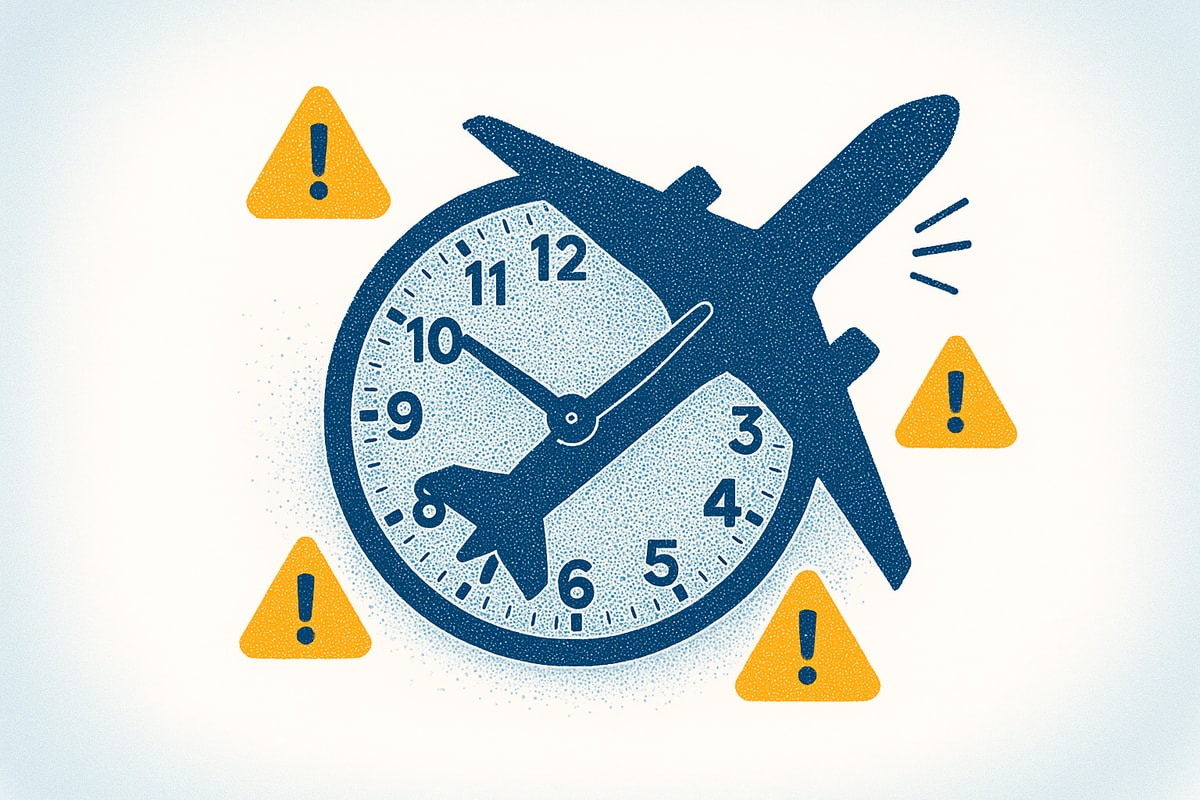
Anyone who flies for work routinely encounters travel disruption. Among business travelers, about 9 in 10 experienced at least one disruption in a recent survey covering the 12 months before August 2025, and among US travelers, 42% dealt with cancellations, up from 25% in 2023. Each disrupted trip cost the average traveler surveyed four hours and 45 minutes in lost productivity.
The per-flight odds explain why you get hit more often than a colleague who flies twice a year. Fly more trips, and you run that same per-flight risk more times in a year, so a small chance of disruption on any one leg adds up fast across a dozen trips. Where you fly adds to it: itineraries that connect through a handful of major hubs run into more ground stops, controller shortages, and schedule knock-on effects than itineraries through smaller airports do.
What Actually Causes Most Disruptions
The system you fly through causes most disruption.
- Weather grounds whole hubs. The Federal Aviation Administration (FAA) orders ground stops that hold departures at their origin with little warning during winter weather.
- There aren't enough air traffic controllers at the facility that manages the skies around the three New York-area airports. The New York TRACON had 129 certified controllers in June 2026 against a target of 226, and the FAA says the facility needs to reach at least 70% to run that airspace at full capacity.
- Airlines usually send alerts only for delays and canceled departures, which means an airline can swap a smaller aircraft onto your route and cost you a seat or cabin without a dedicated warning.
- One late inbound aircraft delays its next scheduled flight, and that delay often carries into the flight after that. Delay propagates through an aircraft's schedule for the rest of the day, so the cause you're told at the gate is often just the first visible link in a chain that started hours earlier on a different route.
None of these causes are something a single traveler can fix by flying smarter. They're built into the system every traveler who flies through the same hubs and the same tight schedules shares.
Why Fixing One Disruption at a Time Doesn't Break the Cycle
Handling each disruption as it comes means refreshing the app, calling the line, and rebooking by hand, then doing it all again three weeks later.
Reacting also means finding out late. During Southwest's December 2022 meltdown, an overwhelmed call center left passengers facing full queues and busy signals, and many learned of their cancellation only at the airport. Seats on the remaining flights go to whoever moves first, and the traveler on hold is rarely that person.
Otto the Agent changes that starting point. For every flight booked through it, the service continuously monitors cancellations, significant delays, schedule changes, equipment swaps, and connection risk, then flags elevated risk before the disruption fully lands so you can protect your schedule and arrive ready for your next commitment before viable alternatives disappear.
What Happens When a Disruption Gets Flagged
What happens next depends on who controls the reservation, and the service handles the two cases differently.
- When the service controls the booking, it searches for alternatives before it messages you. The alert arrives with options already weighed against your next calendar commitment, comfort, cost, and any company rules that apply. You might see choices like protecting your schedule or keeping the cost down, and the mix changes with each disruption. The service always waits for your confirmation before making a significant change.
- When the airline controls the reservation, the service connects you to live agent support at its travel management partner instead of making the change directly.
Across both paths, you use the service in web, iOS and Android apps, and MCP-enabled experiences, with the trip context ready whenever a disruption needs your decision. Travelers finish the booking directly in the same conversation they started it.
Breaking the Pattern Instead of Surviving the Next Trip
A ground stop at LaGuardia remains just as likely when you check flight status in three apps every hour, which only moves the anxiety earlier. Changing carriers after one bad trip leaves the problem intact because the replacement still depends on the same shared air traffic control system, the same weather, and the same tight hub banks. Let the watching happen in the background across every flight you book, and step in only when a flight needs a decision.
Stop Treating Every Disrupted Trip Like the First One
Controller shortages, weather over the hubs, and tight aircraft rotations persist between trips, so disruptions keep repeating. Your response has to persist too, or the next disruption leaves you one step behind.
Otto turns that response into something that runs in the background instead of something you rebuild from scratch every trip. Book each flight through Otto, and it keeps watching after you book, flags risk before you'd otherwise find out, and connects you to a live agent the moment it can't make the change itself. When a cancellation hits, see the guide to automated recovery options and choose from alternatives already matched to your trip.
Activate Otto to get rebooking options before the remaining seats disappear.
Frequently Asked Questions
Why do some travelers get disrupted more often than others?
Connecting itineraries explain much of the difference. A connecting trip creates two or more chances for disruption instead of one, and a late first leg can cost you the second connection even when that second flight itself departs exactly on time. Direct flights only carry the risk once.
Is weather really the biggest cause of flight disruptions?
Weather is the most commonly cited reason, and it's getting worse. Half of US business travelers faced a weather-related disruption in 2025, up from 30% in 2024. Equipment issues, air traffic control delays, and the knock-on effect of a late inbound aircraft fill out the rest of the list.
Does flying through a major hub increase my chances of disruption?
Yes. A handful of hubs absorb far more than their share of the system's delay-management load. In fiscal 2023, San Francisco, Newark, and LaGuardia together accounted for over 39% of all Ground Delay Programs issued at the FAA's 30 busiest airports, a tool used specifically to slow arrivals into a congested airport.
What should I do the moment I suspect my flight will be disrupted?
Check where your inbound aircraft is before you check anything else. Many airline apps show it, and if that plane is still two states away or stuck in weather, your departure is going to move. Rebook yourself first and sort out bags afterward, because seats on the next flights fill once everyone affected starts rebooking.
Is there a way to stop manually tracking every flight for disruption risk?
Otto flags flights booked through it when they reach elevated risk and, when a disruption hits, sends options it's already evaluated or connects you to a live agent at its travel management partner when the airline controls the reservation. You can protect your schedule and make the next decision sooner.