How to Stay Healthy While Traveling for Business: A Practical Guide
Eight habits that decide whether you arrive sharp or wrecked. A practical guide to sleep, jet lag, hydration, food, movement, and germ exposure on the road.


Your last business trip ended with a 6 a.m. flight, three back-to-back meetings, a client dinner that ran late, and a hotel room next to the ice machine. By the time you flew home, you were running on coffee and willpower, and the cold caught up with you by Friday. If you want to know how to stay healthy while traveling for business, none of that was bad luck.
Every piece traces back to a choice you made before the trip, or one you skipped in the moment. The road warriors who handle heavy travel schedules without burning out aren't tougher. They've just built a small set of business travel wellness habits that protect their performance on the road.
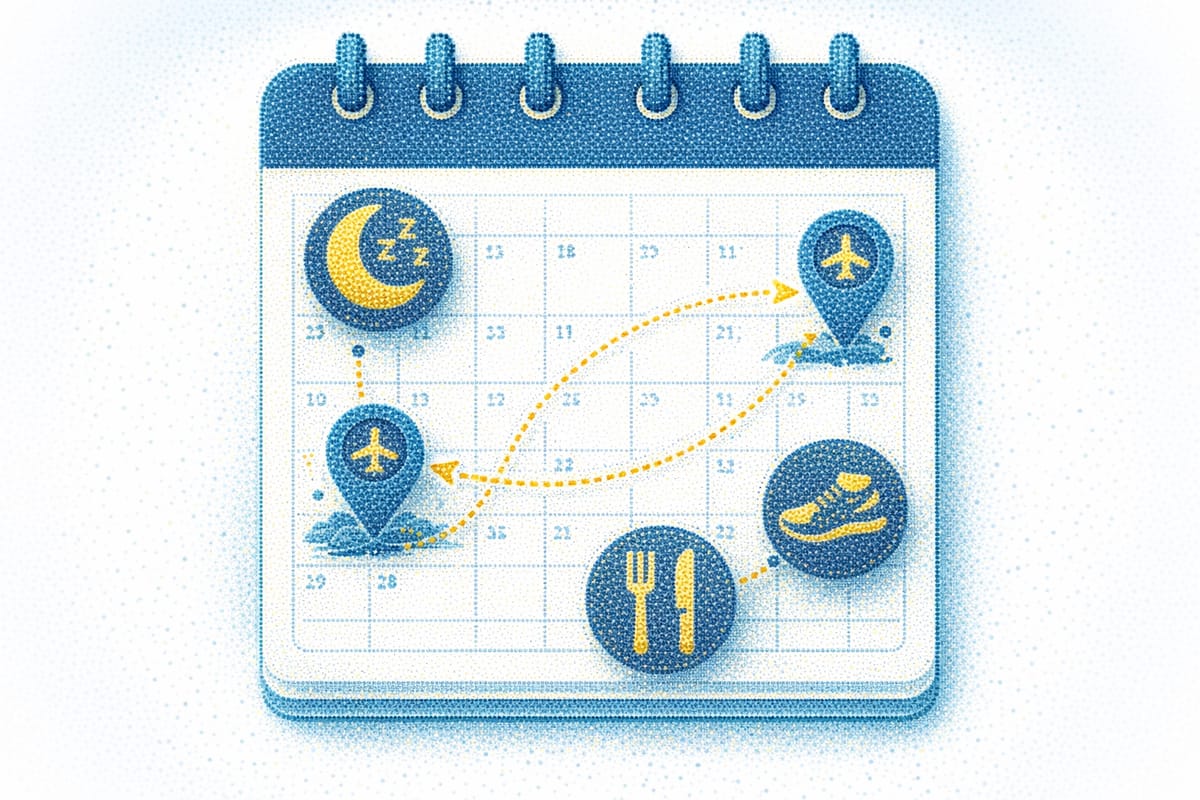
This guide breaks down the eight habits that decide whether you arrive sharp or wrecked: pre-trip prep, smarter booking, sleep, jet lag, in-cabin eating and hydration, on-the-ground food choices, movement, and germ exposure. Work through them once and you've got a system that holds up trip after trip.
1. Pre-Trip Prep: Handle These Before You Pack
Most health problems on the road trace back to something you could have handled before you left. Run through this checklist a week out:
- Prescriptions in your carry-on. Pack a few extra days beyond the trip, and keep meds in original containers with labels for TSA and customs.
- Vaccinations and boosters current. Check the CDC for destination-specific recommendations on international trips, and get the flu shot in season regardless of where you're going.
- Medical info on your phone. Insurance card photo, doctor contact, allergies, current meds. Set up Medical ID on iPhone or the equivalent on Android so first responders can see it without your passcode.
- Snack pack assembled. Jerky, nuts, cheese sticks, protein bars with ≥20g protein. Treat the bag as your default so airport impulse buys lose by design.
- Hotel room request submitted. Email the property a day ahead: quiet floor, away from the elevator and ice machine, blackout curtains if available.
Five minutes of prep beats an hour of scrambling at the gate when you're already wiped.
2. Make Smarter Booking Decisions Before the Trip
Flight timing and hotel location decide how much room you have for sleep and basic routines. The cheap departure only works if it doesn't wreck the morning you flew in for. A hotel 45 minutes from the meeting steals the margin you'd use to eat breakfast or take a walk before the day starts. Booking choices are health decisions. They just don't look like it on the reservation page.
Otto the Agent protects that margin by booking around your calendar instead of the lowest fare. Otto reads your Google or Outlook calendar, surfaces options that fit your meeting schedule, and you confirm the one that works. You land with enough buffer to sleep, eat, and walk into the meeting in shape.
3. Protect Your Sleep on the Road
Bad sleep on the road compounds into every other problem: slower thinking, worse food choices, weaker immune defense. Most travelers underestimate the cost. After 17–19 hours awake, your reaction speed and judgment slide to the equivalent of or worse than a 0.05% blood alcohol concentration, and at 24 hours you're at 0.10% BAC. A few moves protect the hours that matter:
- Respect the cognitive cost. You'd never walk into a negotiation drunk, but a bad travel schedule does the same thing to your brain. Chronic sleep restriction effects show up after six hours of sleep per night for two weeks: deficits equivalent to one full all-nighter, while people consistently underestimate how impaired they are.
- Skip the red-eye before a high-stakes meeting. That fog after a red-eye flight isn't in your head, and it doesn't clear overnight. Reaction time stays impaired for days after sleep restriction.
- Engineer the hotel room. Hotel rooms cost most travelers sleep compared to home, mostly because of unfamiliar noise and light. Research on travelers' sleep shows business travelers get hit hardest by environmental sleep disruption. The room request you submitted before the trip is doing the work here.
- Guard immune defense. Short sleep weakens immune defense. That's part of why exhausted travelers get sick, and why the hours you protect on the road pay back twice.
The goal isn't perfect sleep every night. It's enough recovery to keep the rest of the system from falling apart.
4. Beat Jet Lag Before It Beats You
Crossing time zones drags your circadian rhythm out of sync with the local clock, and that gap costs you sleep, focus, and digestion for days. The rule of thumb: one day of recovery per time zone crossed, unless you intervene. A few moves cut that recovery time meaningfully:
- Shift your schedule before you leave. Two or three days before an eastbound trip, go to bed an hour earlier each night. Westbound, push it later. Even a partial shift cuts arrival fatigue.
- Use light strategically. Morning light at the destination anchors your clock forward. Avoid bright light (especially screens) in the destination evening.
- Time melatonin to the destination, not your origin. Take 0.5–1 mg about 30 minutes before destination bedtime for a few nights. Higher doses don't work better.
- Eat on the destination clock. Skip airline meals timed to your origin and eat breakfast, lunch, and dinner on the new schedule from the day you land.
- Caffeine in the morning only. Late-afternoon coffee extends jet lag. Half-life is 5–6 hours.
The goal isn't to feel perfect on day one. It's to be functional enough to make the meeting and recover faster after.
5. Healthy Eating and Hydration in the Cabin
Cabin pressure and dry air make bad choices hit harder. Skip the alcohol and the heavy, oversalted meals. Cabin pressure sits at roughly 6,000–8,000 feet, which lowers blood oxygen and amplifies the effects of alcohol on the plane, especially during sleep on long-haul flights. The cabin also dulls your taste, which is why airline food runs salty and leaves you bloated. Protein and water-rich foods keep you full without wrecking your digestion before you walk off the plane.
Cabin air runs 10–20% RH. That's drier than most deserts. Drink water before you board and steadily through the flight, before you feel thirsty. One cup an hour is a reasonable target. Ask the flight attendant instead of waiting for the cart. Go easy on caffeine in the air.
Low humidity also dries out your nose and throat, your first defense against airborne bugs. The fix is cheap. The payoff is showing up healthy instead of fighting a cold through your meeting block.
6. Eat Smarter on the Ground
Once you land, food decisions split between the airport, the hotel, and the client dinner. Each has its own trap, and the fix in each case is deciding before you're hungry, tired, or three drinks in.
- Choose protein-forward at the airport. Most major US airport restaurants offer at least one high-fiber, plant-based entrée, and Chipotle and Starbucks protein boxes are everywhere. Availability doesn't help when the closest counter wins by default, so pick before you're running for the gate.
- Lean on your snack pack. All solid foods clear TSA in your carry-on. Jerky, nuts, cheese sticks, and protein bars mean you're never at the mercy of whatever's closest to your gate.
- Set a drink cap before dinner starts. Research on business travel drinking shows travelers drink more on trips than at home, and the share who hit at-risk levels rises on the road. Decide your number before you sit down, not after the second round.
- Drink water between rounds. It paces the alcohol and offsets the cabin dehydration you arrived with. Simple, and it works.
- Order one protein-forward meal. Skip the heaviest thing on the menu. Moderation you can sustain beats elimination you'll abandon by Wednesday.
The trick isn't willpower at the table. It's making the call before the menu shows up.
7. Staying Active When You Have 30 Minutes
The early-morning hotel gym isn't realistic for most road warriors. Use the moves that fit a packed travel day.
- Walk to your meetings. If the hotel is close enough, walk instead of waiting on a rideshare. A 30-minute brisk walk knocks out roughly a fifth of the CDC's weekly aerobic target without carving out extra time.
- Take 20 minutes over zero. Activity doesn't have to be continuous to count. Twenty minutes on the hotel treadmill beats skipping it because you couldn't do a full hour.
- Use the room when the gym's a hassle. A no-equipment circuit of squats, push-ups, lunges, and planks runs 20 minutes and skips the gym commute entirely.
- Move during layovers. A long connection is movement time. Walk the terminal instead of camping at the gate.
- Don't sit still for the whole flight. Long-haul flights raise the risk of deep vein thrombosis. Stand up every hour or two, walk the aisle when you can, and do ankle circles and calf raises in your seat. Compression socks help on flights over four hours, especially if you've had clots before.
8. Avoiding Germs on the Road
Airports and planes pack hundreds of people into shared spaces, and you touch a lot of surfaces other travelers just touched. A few habits cut the exposure without making you the weird one in the boarding line:
- Wipe down your seat. Tray tables, armrests, seat-back screens, and the seat belt buckle are the highest-traffic surfaces on the plane. Use a disinfecting wipe before takeoff.
- Hand sanitizer after every checkpoint. TSA bins, kiosks, gate counters, lavatory door handles. Each one stacks exposure. Sanitize after each.
- Wash hands before eating. Twenty seconds with soap beats sanitizer when you have the option, especially before meals.
- Mask when it makes sense. A KN95 or N95 cuts your exposure on packed flights, in crowded terminals, and when next week's meeting can't move.
- Use the overhead air vent. Direct airflow disperses droplets around your seat. Aim it just in front of your face.
Book Health Into the Trip Before You Leave
The travelers who handle brutal schedules without burning out share one underlying habit: they make the call before the trip starts, not in the moment when they're exhausted and the easy option wins. The buffer, the snack pack, the room request, the meeting-shaped itinerary. None of it gets figured out at the gate. Those choices compound over a quarter, and they're the reason some road warriors arrive sharp while others arrive wrecked.
Otto fits where the trip gets locked in. It uses your calendar and preferences to surface flights and hotels that fit the day you actually have, and you stay in control of the final choice. Start with Otto to build trip planning that protects your schedule before the road starts wearing you down.
Frequently Asked Questions
How do I stay healthy while traveling for business?
Sleep and hydration do most of the work. Short sleep weakens immune defense, and dry cabin air dries out the nose and throat that block airborne bugs. Drink water steadily in flight, protect your sleep, and wash your hands often, especially after shared surfaces in the terminal and on the plane.
What should I eat at the airport to stay healthy?
Go protein-forward and skip the impulse buys. A Starbucks protein box or Chipotle bowl works. So does a bag of protein snacks from home. Most major airport restaurants offer at least one healthier entrée, so the option is usually there. The trick is deciding before you're hungry and rushed.
How do frequent business travelers manage sleep disruption?
They decide on timing and environment in advance. Skip the red-eye before a high-stakes meeting, since reaction time stays impaired after sleep loss. At the hotel, request a quiet room away from the elevator and ask for blackout curtains.
Is it realistic to exercise during a heavy travel week?
Yes, if you drop the 90-minute gym fantasy. Activity counts in short bouts. A 30-minute walk between meetings or a 20-minute bodyweight circuit in your room gets the job done. Twenty minutes beats zero, and walking to a nearby meeting site doubles as your movement for the day.
How can I make sure my travel schedule doesn't wreck my health?
Decide before you book. Poor flight timing and hotels far from the meeting site push the whole trip in the wrong direction. Otto uses your calendar and preferences to surface options that fit your meeting schedule, so you can choose a schedule-friendly flight without rebuilding the search from scratch.