Flight Price Drop Protection: How It Works and Who Offers It in 2026
Compare flight price drop protection across US airlines, credit cards, and booking tools. See what's covered and how to claim a fare drop after booking.


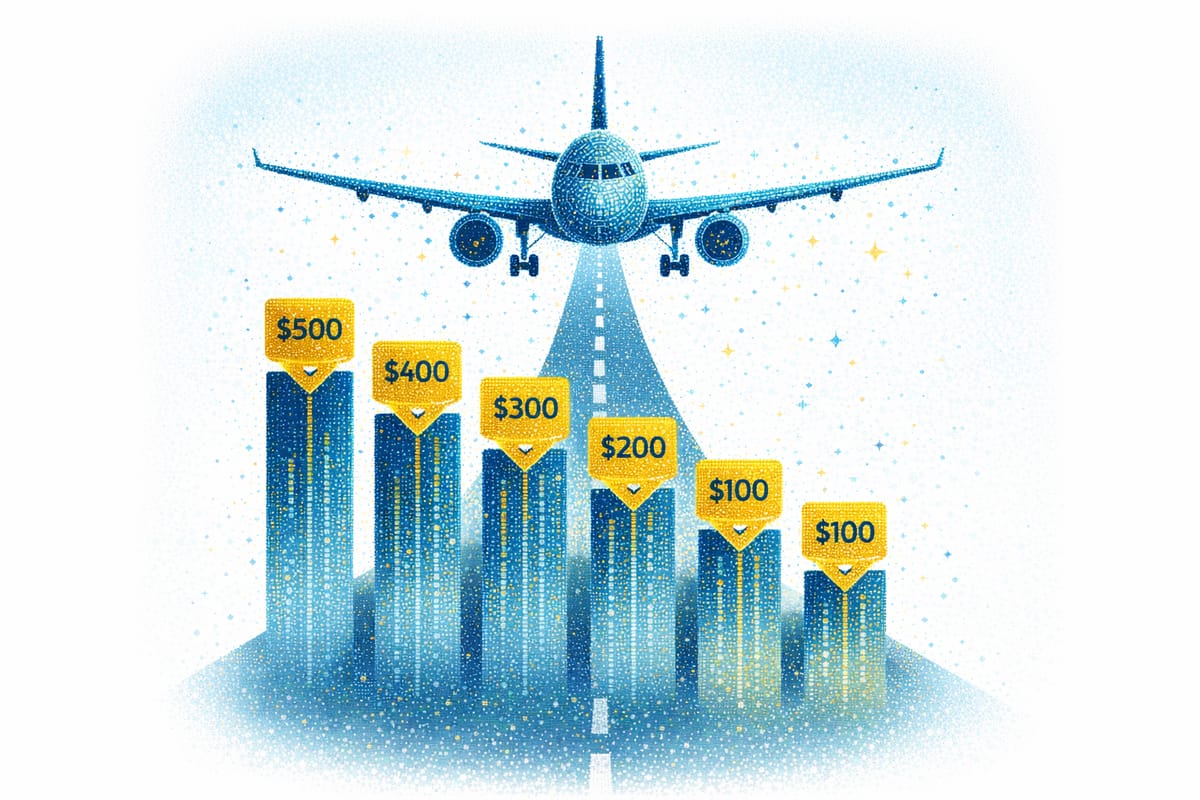
You book a flight for a client meeting. A few days later, the same itinerary shows up cheaper. Getting that difference back, what airlines call repricing or a refare, usually means logging into the airline site, canceling your reservation, rebooking at the lower fare, and hoping the new confirmation still carries your loyalty number and seat assignment.
Most frequent business travelers skip the hassle and leave money on the table. This guide breaks down how flight price drop protection works, what each major US airline and credit card actually covers, and how to claim a drop after you book.
How Flight Price Drop Protection Actually Works
US travelers run into three main types of flight price drop protection. They differ in who does the work, what you get back, and how long the post-purchase price tracking lasts. None of them watch your fare continuously after booking without effort on your end, which is the gap most business travelers feel.
Airline-direct repricing is the most common path. No major US airline refunds fare differences automatically when prices drop after booking. You have to watch the fare yourself and start a change or rebooking through the airline's site. If your fare allows it, the difference comes back as a travel credit or cash depending on your fare class. Lock yourself into a non-changeable fare class at purchase, though, and the option disappears entirely.
Portal-based monitoring is rare. Capital One Travel is the main example tied to a major financial institution, and the Credit Cards section below covers exactly what it watches and what it pays out.
Third-party tools range from free fare drop alerts that still need manual rebooking to paid add-ons that watch eligible bookings after purchase. Most stop tracking the moment you check out or leave you handling every alert yourself, so the work still lands on you.
The corporate tools that once watched fares automatically now mostly sit behind enterprise contracts. That leaves smaller-company travelers without an automated business travel option that monitors the fare from purchase through departure.
Airline Price Drop Policies by Carrier
Every airline makes you spot the price drop and take action yourself. So the difference comes down to what happens after you catch it, and which fare class you booked in the first place.
Southwest
Southwest finished its fare restructuring on January 27, 2026, replacing Wanna Get Away with four new tiers. The new Basic fare cannot be repriced down, only canceled and rebooked, and credits from canceled Basic tickets expire 6 months from the original booking date. Choice fares allow repricing with a 12-month credit window. Choice Preferred and Choice Extra return the difference as cash to your original payment method. Award bookings get points redeposited immediately.
Delta, United, and American
All three follow a similar structure, so the fare type matters more than the airline logo. Basic economy either blocks repricing or charges fees that wipe out most domestic fare drops. Standard non-refundable fares can usually be changed with no fee, and the difference comes back as airline-specific credits. Refundable fares get cash back. American requires that the ticket be completely unused and repriced before the outbound travel date. United's online system does not always handle same-flight repricing cleanly, so you may need to use a different change path to capture the credit.
JetBlue and Alaska
JetBlue offers a Best Fare Guarantee, but it pays a fixed $50 credit and only on the same day you booked. That narrow window matters because Blue Basic fares cannot be changed at all. Alaska's Main Cabin and First Class fares return the full value as a travel certificate, while Saver fares give back only 50% if canceled 14 or more days out.
The Fine Print That Affects Business Fares
The fine print buried in fare rules, credit terms, and federal regulations decides whether you can actually claim a price drop. Three clauses hit business fares hardest:
- Basic economy traps. Alaska, American, Delta, JetBlue, and United all block or sharply restrict basic economy from repricing, so any booking tool that defaults to the lowest fare can lock you into non-changeable tickets at purchase. Book at least a Main Cabin or equivalent changeable fare to keep the door open for later drops.
- Credits that expire fast. Non-refundable credits often expire within months or within a year, and Southwest Basic credits now expire in just 6 months from the original booking date, not the cancellation date. If your schedule shifts or you change roles, those credits can vanish before you use them.
- No federal safety net. No mandate requires airlines to refund fare differences after booking. Penalty-free cancellation within 24 hours only applies to bookings made 7 or more days before departure under the DOT 24-hour rule, and the April 2024 refund rule covers airline-initiated cancellations and schedule changes, not post-booking price drops.
That leaves you exposed to fare swings after purchase. Airfare dropped 5.4% over the year in November 2025, which means prices can move enough after booking that watching the fare matters more than trying to time your purchase perfectly.
Credit Card Price Protection and Third-Party Tools
Automatic help after booking is thin. Most issuers and travel tools either dropped credit card price protection for airfare or limit it to short windows that close well before your trip.
Capital One is the only major issuer left. Chase eliminated its benefit in June 2018, Citi dropped Price Rewind in September 2019, and American Express never offered it for airfare. Capital One's version is narrow too: it only triggers on portal bookings flagged "book now," watches prices for 10 calendar days, and caps refunds at $50 in travel credit, well under what a typical corporate roundtrip fare costs. A separate price match guarantee covers the full difference, but only within 24 hours and only by phone.
Travel tools don't fill the gap. Google Flights tracks prices for free but hands rebooking back to you. Hopper focuses on pre-booking prediction and price freezes. Expedia sells add-on price protection on eligible flights, but refunds pay out after travel, often too late to help.
Short windows, low caps, manual rebooking, coverage that ends at checkout: that's the pattern across cards and consumer tools. Continuous post-booking price monitoring on the trip you actually booked is the gap Otto the Agent was built to close. Book a refundable flight through Otto and the fare stays tracked through departure. When a lower price shows up, Otto cancels the original booking, refunds your credit card, and rebooks at the new fare.
The savings post straight to the card you paid with, ready to spend on anything. Non-refundable fares aren't eligible, since the original ticket can't be cancelled for a refund.
How to Claim a Price Drop When You Spot One
Catching the lower fare is only half the work. Once you see it, the steps below decide whether you actually capture the difference or watch it slip away. Every one of these steps assumes you spotted the drop yourself, which is exactly the part automation should handle for you.
- Use the DOT 24-hour rule first. If the price drops within 24 hours of booking and you booked 7 or more days before departure, cancel the original ticket for a full refund to your original payment method and rebook at the lower fare. This works on every US airline regardless of fare class, including basic economy. It's the one universal price-drop tool every traveler can use.
- After 24 hours, check your fare class before anything else. Pull up your confirmation and confirm the fare allows changes. Booking changeable fares from the start keeps this step trivial.
- Initiate a change, not a cancel-and-rebook. On Delta, United, and American, use the "change flight" path on the airline site and reselect the same flight at the lower price. The system credits the difference as airline-specific travel credit. Canceling and rebooking can trigger fees or lose your seat assignment.
- Confirm the credit posts before closing out. Some carriers issue the credit instantly, others within 24 hours. Screenshot the original fare and the new fare, and double-check that your loyalty number, seat assignment, and Known Traveler Number stayed attached on the new confirmation.
- Call when the online path fails. United's same-flight repricing doesn't always work through the website, and JetBlue's Best Fare Guarantee requires a phone request. Have the lower fare URL ready and reference the specific fare class.
Run through this list once and the math is obvious: spotting drops, comparing fares, requesting credits, and verifying loyalty data is a part-time job. The travelers who actually capture price drops are the ones who let a virtual travel assistant do this work for them.
Stop Leaving Fare Drops to Chance
Booking a flight is the easy part. Covering the stretch after purchase is where most protections run out fast, prices keep moving, and money slips through when no one is tracking the fare for you. Once you know where airlines, card issuers, and booking portals stop watching, the real opening gets easier to spot.
If the price drops after booking, and if your flight is refundable, you can rebook and get cash back to your credit card. Every refundable flight booked through Otto gets monitored automatically, and an email lands in your inbox the moment the fare slips below what you paid. One click runs the cancel-and-rebook flow for you, with no opt-in or setup on your end. Non-refundable fares stay outside the program because the original ticket can't be cancelled for a refund.
Put Otto on your next trip for automatic fare drop refunds on every refundable booking.
FAQ
Does the DOT require airlines to refund fare differences when prices drop?
No federal rule requires airlines to match lower fares or issue credits after the standard 24-hour cancellation window closes.
Can I reprice a basic economy ticket if the fare drops?
On major US airlines, basic economy fares are usually non-changeable or carry fees that wipe out any savings from a price drop. Booking at least a Main Cabin or equivalent changeable fare keeps repricing on the table from the start.
How often do business flights actually drop in price after booking?
No public dataset shows how often US domestic fares drop after booking. That leaves travelers relying on fare tracking or manual checks rather than a clear benchmark for how often repricing opportunities show up.
How can I get fare drop alerts without manually checking prices every day?
Free trackers like Google Flights can flag drops, but the rebooking work still falls on you. Otto handles this differently: every refundable flight booked through Otto is monitored automatically. If the price drops after booking and your flight is refundable, you can rebook and get cash back to your credit card. Otto cancels the original flight, refunds you to your original payment method, and rebooks at the lower price. Non-refundable fares aren't eligible.
Do any credit cards still offer flight price drop protection?
Capital One is the only major US issuer with an active program. It caps automatic refunds at $50 and monitors for 10 days. Chase and Citi both eliminated their programs in 2018 and 2019 respectively.