What Is a Vehicle Allowance? Tax, Coverage and Limits
Your vehicle allowance covers your own car, not a rental or flight. See what's taxable and where the coverage stops.


Your offer letter listed a monthly vehicle allowance "for business driving." Then your first client visit meant a flight out of town and a rental car at the other end, and neither one was covered by the allowance. So what is a vehicle allowance, and where does its coverage stop?
A vehicle allowance is a fixed monthly payment for using your own car on the job. It's compensation, not a reimbursement, so it's taxed differently and stops applying once you leave your home market. This guide covers what it funds, how it's taxed, how it compares to mileage reimbursement and FAVR, and where its coverage ends on a business trip.
What a Vehicle Allowance Is
A vehicle allowance is a fixed amount your employer pays you on a recurring schedule, usually monthly and usually through payroll, to cover the cost of using your own car for work. The vehicle allowance doesn't change with how many miles you drove that month, and under the standard structure, nobody asks you for receipts or a log. Your employer adds the allowance to your paycheck.
People also call it a car allowance, an auto allowance, or a vehicle stipend, and the terms mean the same thing. An employer can pay a flat vehicle allowance and let you run your own vehicle. This eliminates the cost of buying and insuring a company car and the paperwork of processing a mileage log every month. Outside sales and field service employees who cover a region by car are typical recipients, because their driving is regular enough that a standing allowance beats trip-by-trip reimbursement on paperwork alone.
What a Vehicle Allowance Covers
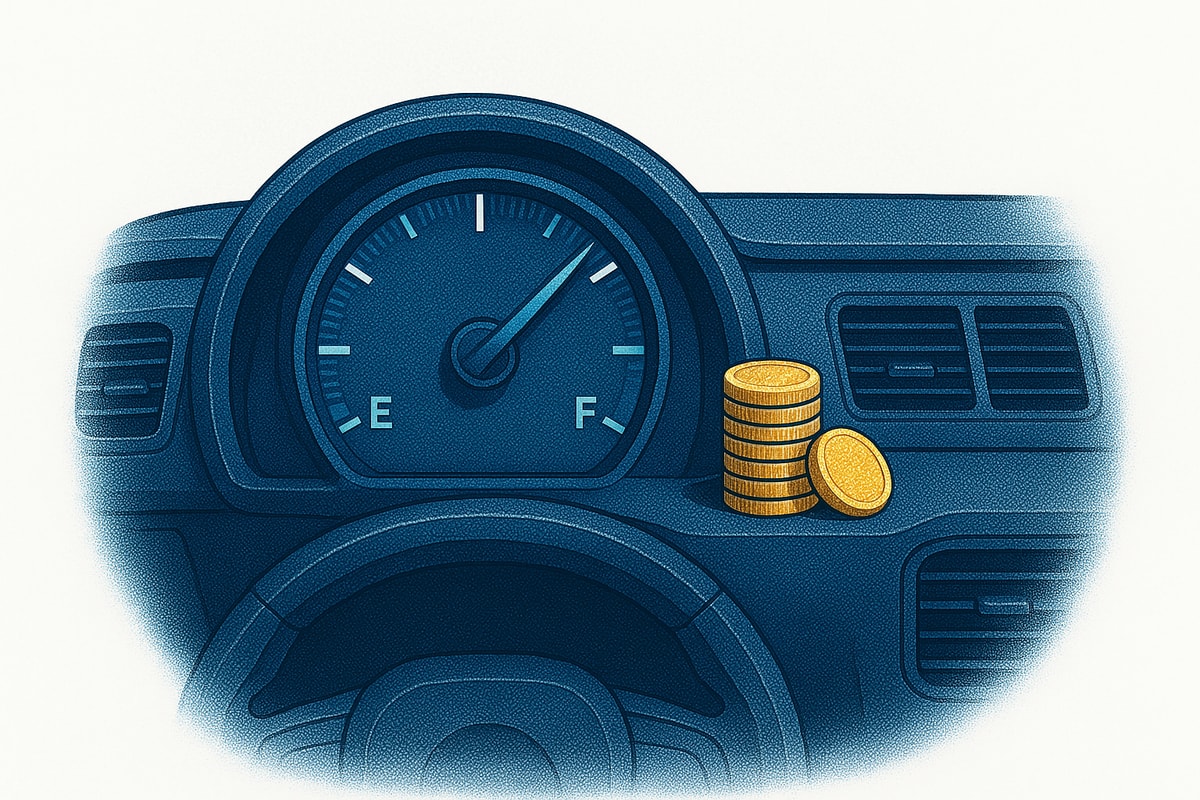
Your employer expects the payment to absorb the whole cost of owning and running the car, not just the gas you burn between client sites. These actual car expenses are what the allowance funds.
- Fuel costs, at whatever your region charges per gallon, come out of the allowance.
- Insurance premiums swing widely from state to state.
- Routine maintenance and repairs come out of the allowance.
- Tires wear on business miles, so replacements sit inside the payment.
- Depreciation is the highest cost of ownership.
- Registration fees and vehicle taxes also come out of the allowance.
That design means your employer sets one number and you absorb the variance. A colleague with a compact territory and cheap insurance keeps more of the same payment than you do in a wide, high-premium market.
Why Your Vehicle Allowance Gets Taxed
A standard vehicle allowance is taxable wages. Because that flat structure doesn't require you to return the unused portion, it is a non-accountable plan by default, so payroll treats it like salary. Run the arithmetic on whatever your number happens to be. On a $700 allowance, your 7.65% FICA share takes $53.55 before income tax, your employer owes another 7.65%, and its $753.55 outlay reaches you as $646.45 after FICA alone.
The exception is an accountable plan, which makes the same money tax-free when your employer runs it correctly. The expense has to connect to your job, and you have to substantiate the miles, meaning the date, destination, and business purpose of each trip, logged within a reasonable time. Return anything your employer paid above what you substantiated, or the whole payment reverts to wages on your W-2.
A smaller tax-free reimbursement can therefore beat a larger taxable allowance. Every dollar under an accountable plan reaches you whole, while every dollar of a flat allowance arrives with FICA and income tax already removed. Since employees generally can't deduct unreimbursed vehicle costs on their own return anymore, there's no way to recover that difference in April.
Vehicle Allowance vs. Mileage Reimbursement vs. FAVR
Employers use three mechanisms to pay for personal-vehicle use, and which one you're on decides how much of your driving pay actually reaches you after tax. Which one suits you depends on how predictable your driving is and how much record-keeping you can stand.
Flat Vehicle Allowance
The flat allowance trades precision for predictability. Both sides know the allowance in advance, but high-mileage months don't increase it. It fits best when your driving stays consistent and your employer set the allowance well. Because the allowance stays fixed, a low-mileage month can leave more for ownership costs, while a high-mileage month puts more operating and ownership costs against the same allowance.
Mileage Reimbursement
Per-mile reimbursement pays you against a log of business miles and is tax-free up to the IRS standard rate. In 2026 there are two rates. Employers can reimburse miles driven January 1 through June 30 at 72.5 cents per mile, and miles driven July 1 through December 31 at 76 cents per mile under Announcement 2026-11. The July increase followed a run-up in fuel prices. That was the first mid-year adjustment since 2022.
Your 2026 log needs a subtotal on each side of June 30, because the date you drove sets the rate, not the date you filed. Anything your employer pays above the applicable rate is taxable wages.
FAVR
A fixed and variable rate plan splits the payment into two pieces. The fixed monthly amount covers ownership costs such as insurance, registration, and depreciation, and the plan calculates it from your home ZIP code, so an employee in a high-premium state gets more than one in a cheap one. The variable per-mile amount covers operating costs like fuel and tires. Both are tax-free when the IRS conditions hold.
For 2026, the calculation uses a standard automobile cost with a $61,700 cap, and each covered employee has to substantiate at least 5,000 business miles a year or 80% of their annual business mileage, whichever is greater. A FAVR plan also has to cover at least five employees at all times, so it isn't available to a small or single-employee team. You get precision in exchange for detailed annual records.
What a Vehicle Allowance Does Not Cover
A vehicle allowance covers your car, in your market, and stops there. The IRS calls your regular work area your tax home, and driving inside it is what the allowance is built for. Once you travel away from home overnight, destination ground transportation runs through the travel policy instead. The costs that fall outside the allowance include:
- The rental car you pick up at the destination airport is a travel expense.
- Rideshares and taxis between the hotel and the client site fall under the travel policy.
- Airport parking for your own car while you're away is a separate reimbursable expense.
- Tolls and mileage on the drive to your home airport fall under the travel policy, and some employers cap the mileage at the distance from your office to the airport.
- You expense the fuel you put in the rental with a receipt like anything else.
All of those run through your company's expense documentation guide, completely separate from the allowance that lands in your paycheck without anyone asking. Some companies also pay a daily travel stipend for meals and lodging on the same trip, and that runs on its own set of rules too. Otto the Agent stores the receipt for anything it books and sends it to you, so the documentation is ready before the claim goes in rather than something you assemble after the fact.
How to Tell Whether Your Allowance Is Working
Check the number instead of accepting it. Work the after-tax math, then ask HR the questions below.
- Work out the after-tax value rather than the headline figure. Subtract your marginal income tax rate and your FICA share; what's left funds the car.
- Price a year of business miles at the applicable 2026 rate, the first-half rate before July 1 and the second-half rate after, then compare with the after-tax allowance.
- Find out whether the plan is accountable or non-accountable. If the allowance appears in Box 1 of your W-2 as wages, it's non-accountable.
- Ask which policy covers ground transport out of town, and whether that reimbursement comes on top of the allowance or instead of it.
- Ask whether anyone reviews the amount on a schedule. Fuel prices forced a federal rate change in July; an old allowance has had nothing pushing it up.
Which plan you're on, and what happens when you leave town, are questions HR can answer in a sentence. If a claim gets kicked back on a technicality rather than a policy gap, check the common rejection triggers before you resubmit.
Know What Your Vehicle Allowance Covers Before You Fly
Book the flight, rental car, and ground transportation with the right reimbursement process in mind instead of discovering the boundary after submitting your claim.
Otto keeps the policy decision attached to the booking process in web, iOS and Android apps too, instead of leaving you to sort it out during reimbursement. It ingests your company travel policy and personalizes the options against it. It marks each one as within policy or flags a violation with an explanation, so you can see its policy status before you choose.
Put Otto to work on your next trip to keep your flight, hotel, and rental-car bookings aligned with the policy that pays for them.
Frequently Asked Questions
Can you negotiate a higher vehicle allowance?
Yes, and the strongest window is your annual review or a role change that expands your territory, not mid-year. Bring a one-page comparison instead of raw numbers: your current after-tax allowance next to what the IRS standard rate would pay for your actual mileage. A documented gap gets approved faster than an anecdotal one.
What happens to your vehicle allowance if you stop driving for work?
A non-accountable allowance is wages, so removing it reduces pay and belongs in a compensation conversation. Your employer can end it going forward for an at-will role, with whatever advance notice your state requires, but cannot claw back months already paid. Ask whether base pay adjusts to offset the loss.
Does a vehicle allowance affect your overtime pay?
For non-exempt employees, a flat allowance paid without requiring mileage substantiation counts as remuneration under the FLSA, so it factors into the regular rate used to calculate overtime. A properly substantiated, accountable reimbursement is treated differently and generally stays out of that calculation. Ask payroll which category your allowance falls into.
How do I keep ground transport receipts from holding up my expense report?
Missing or mismatched receipts are the most common reason a claim bounces back for rework. For any car rental booked through Otto, the receipt is stored and sent to you automatically once the booking is confirmed, so it's already in hand when you build the report instead of something you track down later.