When Do Airline Prices Drop?
Fares fall when airlines reopen cheaper seats. See the best booking windows and how to catch a drop after you book.


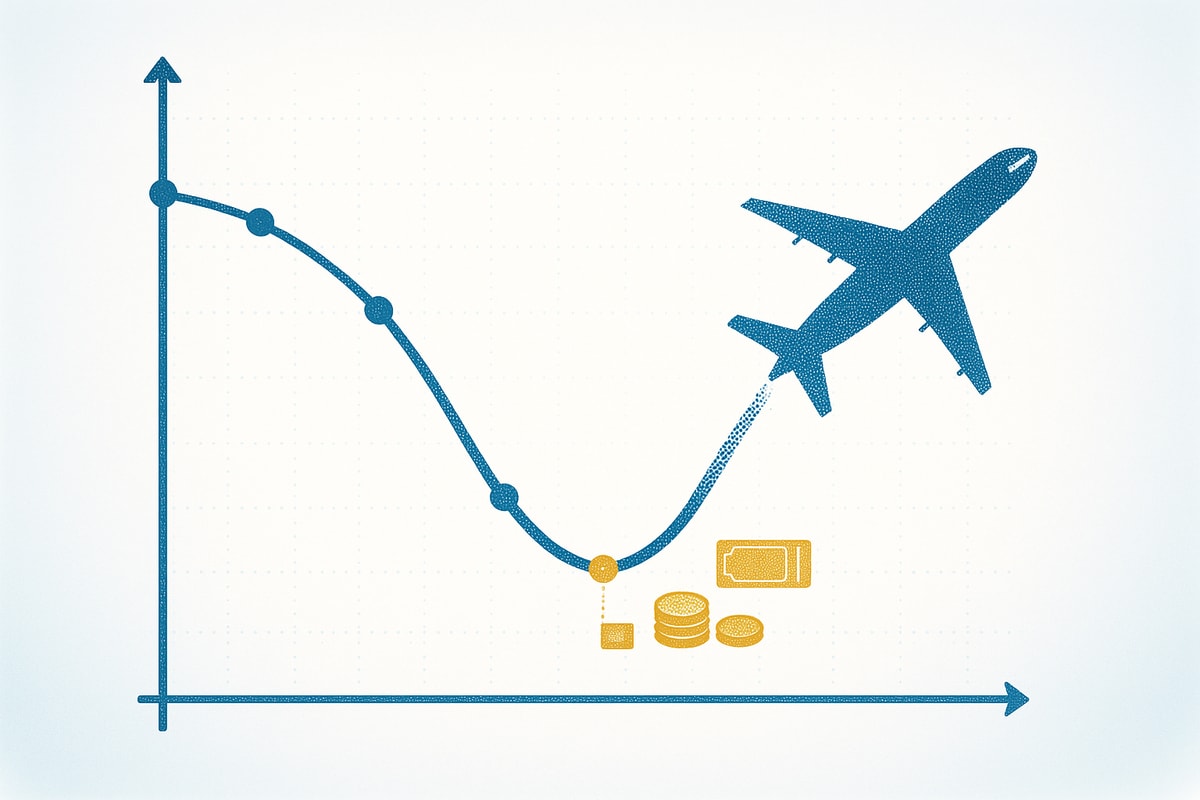
The fare on your Denver flight dropped $80 three days after you booked it. The client meeting is locked for the 14th, and the ticket is paid for. The airline's site now shows a price you'd have taken in a heartbeat if waiting had been an option.
Airline prices move for reasons you can learn, and a few you can plan around. This guide covers five areas: how fares are set, which timing myths fail, when prices are most likely to drop, what to do after checkout, and how to book when you cannot wait, so you can stop guessing before you book and stop eating the drop afterward.
How Airlines Set Flight Prices
Every seat on a flight sells out of a lettered fare class, and the price you see is the cheapest class still open at that moment. An airline files a fixed price for each class ahead of time, then its revenue management system decides how many seats to sell at each price, and that seat allocation shifts constantly based on demand. Only the allocation moves; the price tags themselves stay fixed until the airline refiles them.
Discounted classes fill first, so when the last seat in the $240 bucket sells, your next search returns the $310 bucket. Airlines don't publish how many seats remain in any class, so the jump feels random. If a flight sells faster than forecast, the airline closes cheaper classes early; if sales lag, it can reopen a lower class, and that reopening is the fare correction you see reflected in the price.
Myths About Timing Your Booking (and What Moves Prices)
Most booking folklore predates those systems, and it doesn't hold up.
- Booking on a Tuesday doesn't guarantee the lowest fare. Current fare data shows Friday is now the cheapest day to book a ticket, while Tuesday remains the cheapest day to fly, with fares running about 14% below Sunday departures.
- The midnight-booking myth dates to when airlines loaded new fares by hand each morning. Airlines now update fares throughout the day, so the time of day no longer matters.
- Marketers stuck the National Cheap Flight Day label on August 23 during a seasonal slide. Late-August fares fall because school starts and summer demand fades, and that decline stretches across weeks.
Booking pace, competitor filings, and schedule changes drive class availability. When an airline cuts flights on a route, the remaining cheap classes sell out faster, and fares climb; when a competitor adds a route, fares fall.
When Airline Prices Are Most Likely to Drop
The lowest fares usually fall inside one of these booking windows.
- Domestic fares can cost less when booked at least 34 days before departure, which can save up to 25% compared to last-minute bookings.
- International fares can cost less when booked 18 to 29 days before departure, which can save up to 17% compared to booking more than two months out.
- Inside three weeks, fares typically step up at 21, 14, and 7 days before departure as the cheapest classes close.
Underbooked flights drive most close-in discounts, since airlines would rather fill a seat than fly it empty. Seasonal demand works the same way, just in slower motion. Fares typically run well below their summer peak once the season turns, with September and October among the cheaper months to fly. Both are exceptions, though, because most flights get pricier as departure nears, and business-heavy routes fill up fastest in the final two weeks.
What to Do When the Price Drops After You've Already Booked
Booking early doesn't have to mean losing out if the fare drops later. A board meeting set ten weeks out still gets booked ten weeks out, whether or not that lines up with the fare curve, so what happens next depends on how you booked.
Book directly with the airline at least seven days before departure, and federal rules require it to either give you a 24-hour window to cancel for a full refund or hold the fare without payment for 24 hours, no matter the fare type. Past that window, a fully refundable fare lets you cancel, get the cash back, and rebook at the lower price. A non-refundable fare usually pays out as airline credit at best, and basic economy usually pays out nothing.
Otto the Agent keeps working after you book, watching the price on fully refundable flight reservations booked through Otto, so catching a drop doesn't depend on you remembering to check. For the airline-by-airline comparison of cash refunds versus credit, and the exact mechanics of how post-booking monitoring catches a drop, see this full monitoring breakdown.
Booking Smart When You Can't Wait for the Best Fare
A fixed meeting date rules out waiting for the lowest possible fare, but a few habits still tilt the odds your way.
- Book a refundable fare when the trip date is still soft, since a late change on a non-refundable ticket often costs more than any change fee used to.
- Set a target price and book when the fare hits it instead of waiting for a theoretical bottom.
- Stop re-shopping the same fare class once you've booked. On a non-refundable ticket, there's nothing to gain from watching the price move.
A refundable fare does more than protect against a schedule change. It also keeps the door open on price, since Otto is already watching any refundable reservation booked through it for a later drop.
Stop Losing Money on Fares That Drop After You Book
Every booking window in this guide is built around the day you buy. None of it does anything for you once the ticket is paid for, which is exactly when most travelers stop paying attention and the savings go unclaimed.
Otto closes that gap. On every refundable reservation booked through it, Otto keeps watching the price after checkout and surfaces a drop for you to approve, instead of leaving it to chance. That protection only has something to work with once you've booked a flexible fare in the first place.
Activate Otto to rebook fully refundable flights when fares drop after checkout.
Frequently Asked Questions
Do flight prices drop during sales events like Black Friday or Cyber Monday?
Flight prices don't drop sitewide for Black Friday or Cyber Monday. Airlines run promotional fares around those dates, but the discounts usually apply to specific routes, not every seat on the airline. The fare-class system still sets the final price, so a sale just means more seats opened in a cheaper class than usual.
Do budget airlines follow the same price-drop pattern as major carriers?
Budget airlines don't follow the same price-drop pattern as major carriers. Carriers like Spirit and Frontier start with a lower base fare and tend to fill remaining seats closer to departure rather than spread discounts across a long booking window. A late-notice deal is more realistic on a budget carrier than on a legacy one.
Does a one-way ticket drop in price the same way a round-trip ticket does?
One-way and round-trip tickets price independently. Each direction of a trip draws its price from its own fare class, so a drop on the outbound leg doesn't mean the return leg moved too. Most domestic itineraries are priced as two combined one-way fares anyway, so it's worth checking each leg on its own.
Does searching for the same flight repeatedly make the price go up?
No, repeated searches don't raise the price by themselves. Tests found identical prices in incognito and normal browsers on Delta, JetBlue and United routes, so the jump you sometimes see between searches comes from the fare class selling out, not the airline tracking you. Clearing cookies or switching devices won't change the fare.
Can a flight price-prediction tool tell you exactly when a fare will drop?
No tool can name the exact day a fare will drop. These tools estimate odds from historical pricing on similar routes, which is different from knowing the next price change in advance, so treat a "wait" recommendation as a probability, not a guarantee.