Corporate Hotel Program: How to Build One Travelers Actually Use
Design a corporate hotel program travelers choose over Hotels.com. Fix leakage with rate transparency, loyalty credit, and post-booking price monitoring.


The preferred hotel list exists and the rate caps are set, but some travelers still book on Hotels.com because the points are better and the process is faster. A managed hotel program travelers route around produces worse data and higher average spend while creating duty of care gaps, no matter how well the negotiated hotel rates were sourced.
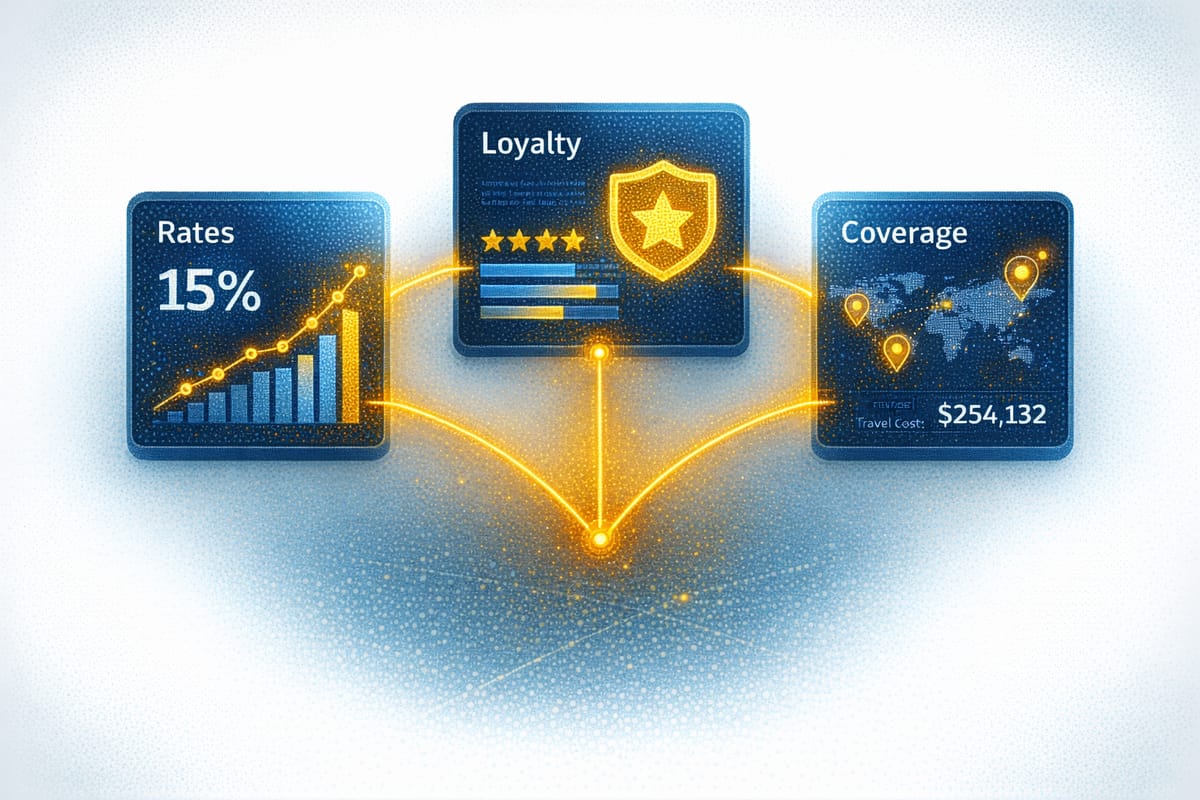
Travelers choose the corporate hotel program when it matches consumer sites on speed, rate clarity, loyalty credit, and useful inventory. Each design decision addresses a specific reason travelers leave the managed channel, so you can close the gaps that drive hotel leakage. A strong corporate travel policy sets the frame, but the program design decides whether travelers follow it.
Why Travelers Bypass Corporate Hotel Programs
Travelers bypass the corporate hotel program when it loses on the factors they actually weigh: rate transparency, loyalty credit, booking speed, and property selection. Better pricing available outside the online booking tool (OBT), the inability for travelers to make self-service changes in the OBT, and the lack of content availability in the OBT are consistently cited as the top causes of hotel leakage. Both point to program-design failures.
Loyalty credit hits travelers personally. Nearly three-quarters (71%) of business travelers believe that if they give up their time to travel, they should have the ability to earn loyalty points, and over half (51%) would risk being reprimanded for out-of-policy bookings if it meant they could book a hotel where they could earn loyalty points. That expectation affects channel choice: 52% of US business travelers say they would never consider booking a hotel where they could not earn loyalty points. Points are a real financial benefit at stake with every booking decision.
How to Build a Corporate Hotel Program Travelers Choose
Building a program travelers actually use comes down to five design decisions that address the specific reasons they leave the managed channel.
1. Build the Preferred Hotel List Around Where Travelers Actually Go
Most preferred hotel lists prioritize negotiated brand rates over the cities and neighborhoods where travelers actually stay. A preferred property near the company office does not help a traveler who needs to stay near a client site in a different suburb. When 83% of travel managers prioritize company-negotiated rates and 82% look for properties near their own offices but only 44% want to be close to client locations, the list drifts away from actual traveler demand.
A functional preferred hotel program starts with your own data. Analyze your complete travel spend by destination and supplier, including booking lead time, before entering any negotiation, then quantify leakage to set a baseline. Tie the list back to your travel policy template so the preferred rates and the rules match.
From there, a tiered sourcing structure typically works best:
- Highest-volume markets: property-level negotiated rates.
- Secondary markets: chainwide discounts to fill coverage gaps.
- Long tail: consortia and Travel Management Company (TMC) preferred rates.
Because chainwide deals often overlap with markets where preferred individual properties already exist, contain chainwide deals to markets where no preferred property exists. That protects negotiating volume at your top hotels.
2. Rate Transparency at the Moment of Booking
Travelers bypass corporate channels when they can't quickly see whether the corporate rate beats what they'd find on a public site. Rate transparency shows the corporate rate alongside market inventory at the moment of selection so the traveler can book without checking a separate system or cross-referencing.
Negotiated hotel rates often exist but fail to appear in the booking system. One in six rate audits (17%) reveals a discrepancy between what was negotiated in the contract and what appears in the system. When discrepancies are found, companies pay an average of 14% more than negotiated. Rate transparency in a functional hotel program means the preferred rate is visible in the OBT, clearly flagged as preferred, with policy compliance status clear before the traveler confirms.
When rate distrust drives leakage, the program needs current pricing and policy status visible before confirmation. Otto shows in-policy hotel options during trip selection with the rate and policy signal in the same workflow, without a separate lookup.
3. Solve the Loyalty Credit Problem Before It Drives Leakage
Preferred agreements can include loyalty benefits as negotiated terms. Most major brands allow point earning on corporate negotiated rates when booked through the right channel, so the channel your program controls is the decisive factor for eligibility.
When loyalty numbers attach automatically to every booking, the traveler gets the credit without leaving the managed channel. Manual re-entry costs points through incorrect entries and drives travelers to the hotel website where their number is already saved. For Direct Travel customers, Otto the Agent adds AI-powered booking on top of that existing relationship. It stores hotel loyalty numbers and auto-applies them to bookings it handles. Loyalty credit stays inside the managed channel, and the reporting record tied to each stay gets cleaner.
4. Post-Booking Price Monitoring as a Hotel Program Feature
A corporate hotel program that negotiates rates and then stops monitoring leaves savings on the table. Because hotel prices are set by dynamic pricing algorithms that adjust throughout the day, refundable rates can drop meaningfully between booking and check-in. Most programs aren't watching: 35% of programs rely on their TMC to check rates and 32% trust the hotel to do it.
Programs decide whether to capture savings that appear after booking on refundable rates. One caution: monitor negotiated rate utilization alongside savings. Aggressive reshopping can pull volume away from preferred properties when cheaper rates appear elsewhere, which weakens future negotiations.
Capturing post-booking savings requires monitoring after the initial reservation. Traveler-led re-shopping on consumer sites is the alternative most programs default to. Otto monitors hotel prices on every refundable booking it handles, sends a price-drop alert when the rate drops below what was paid, and cancels and rebooks at the lower rate when the traveler clicks through. Post-booking price movement becomes managed cost avoidance instead of a reason to leave the channel.
5. Measure Hotel Program Performance Beyond Attachment Rate
Most hotel program reporting stops at attachment rate, the share of bookings using preferred properties. That single number hides whether the program is actually working. These metrics reveal what attachment rate alone cannot:
- Attachment rate by destination. A high overall attachment number can mask zero preferred coverage in a traveler's actual destination. Tracking coverage by destination shows where the list has gaps.
- Average booked rate versus preferred rate. ABR/ANR variance tells you whether travelers are using the negotiated rate or just the property. A property being in the program is no guarantee the rate is being captured.
- Leakage rate by booking channel. Break leakage down by channel. Split direct hotel bookings from OTA bookings, and track conference room blocks separately because they need a different intervention.
- Traveler satisfaction with preferred properties. High complaint volume signals a list that needs updating. Happy travelers are more likely to follow policy, so traveler feedback should feed directly into sourcing decisions.
- Duty of care coverage rate. What percentage of hotel stays have an itinerary record the company can access? 29% of travel managers do not know how long it would take to locate affected employees in a crisis, and every off-platform booking widens that blind spot.
A Hotel Program Travelers Choose Is One Built Around How They Actually Book
A corporate hotel program travelers choose makes the managed channel the path of least resistance and the best source of program data. Every stay should create a clean record finance, travel, and duty-of-care teams can use without chasing expense reports after the fact.
Growing companies still need managed-channel adoption when travelers route around the OBT or send routine hotel changes through support channels. Otto gives those programs a free lightweight managed channel that keeps loyalty numbers, in-policy hotel options, current pricing, and post-booking price monitoring connected to the booking flow. Programs get cleaner confirmations and receipts, lower support friction and call-in volume, better visibility into where travelers are staying, and a free-to-try model with no contract or commitment.
Start with Otto to build hotel program compliance without the friction that drives travelers to consumer sites. Use it to test managed-channel adoption before hotel leakage becomes the default booking pattern.
Frequently Asked Questions
What is a corporate hotel program?
A corporate hotel program directs hotel spend toward suppliers the company has agreements with through negotiated hotel rates and booking rules for preferred properties. It sits inside the broader managed travel program alongside the T&E policy and OBT.
How do I negotiate hotel rates for a corporate program?
Start the RFP process with historical room-night data by property to justify projected volume. Concentrating volume at fewer properties strengthens your negotiating position and typically yields deeper discounts than spreading spend thinly across many hotels.
Why do travelers bypass preferred hotel lists?
Common drivers include missing destination coverage, unclear preferred-rate status, and booking workflows that fail to preserve loyalty credit.
How do I measure hotel program compliance?
Move beyond blended attachment rate. Track attachment rate by destination to find coverage gaps, average booked rate versus preferred rate to confirm travelers capture the negotiated price, and leakage rate by channel to separate direct bookings from OTA bookings and room blocks.
How do I make sure loyalty numbers attach to every hotel booking?
Build loyalty capture into the managed booking workflow so travelers don't have to follow up. Otto applies saved hotel loyalty numbers during bookings it handles. That reduces point-driven leakage and keeps program reporting cleaner.