How to Calculate Car Allowance for Employees
Set a defensible monthly figure, test it against the 2026 IRS mileage rate, and budget the payroll cost.


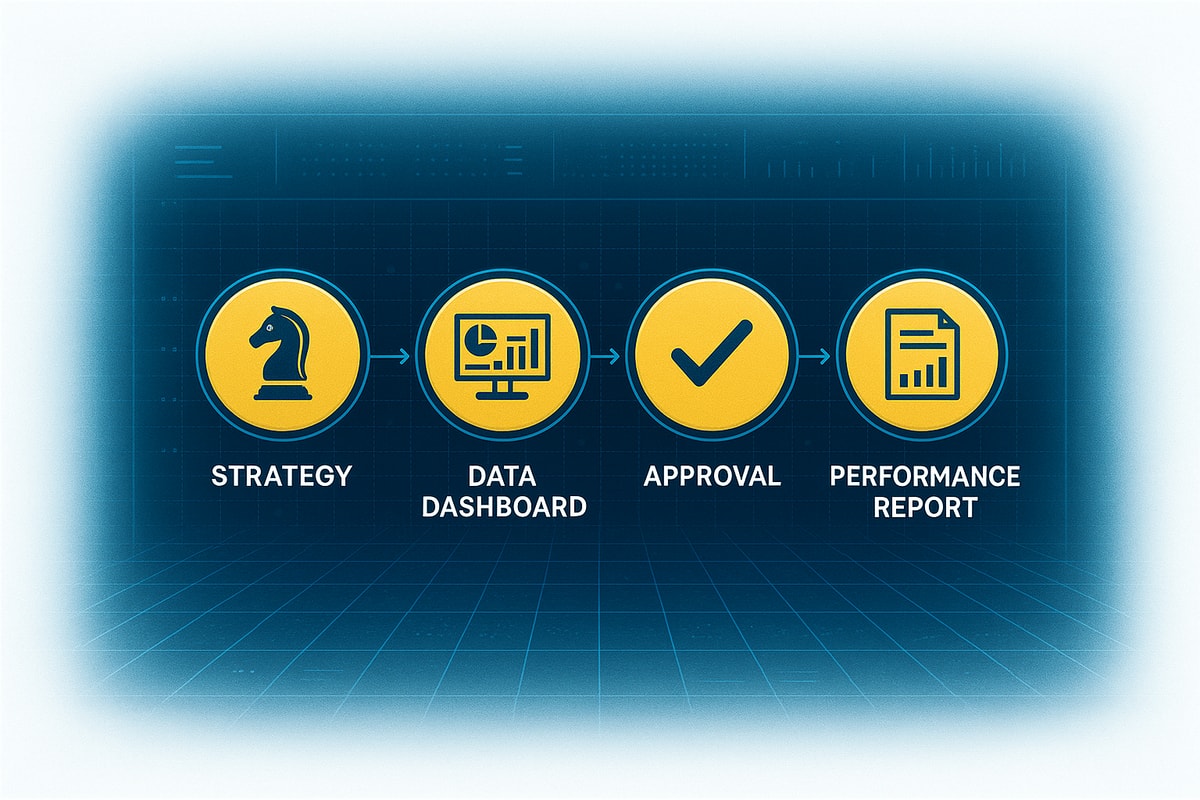
Finance flags that the vehicle allowance line grew while rental and per diem spend held flat, and asks what changed. Nothing changed. The monthly figure your field reps receive came from an old job posting, and nobody has derived it since.
Knowing how to calculate car allowance for employees takes four steps and your own mileage data. Run them, test the result against the IRS business mileage rate, then record the derivation and the payroll cost beside it so both survive questions from finance and from the driver who receives the payment.
What a Car Allowance Actually Covers
A car allowance is a fixed recurring payment for business use of an employee's own vehicle. It stands in for the recurring costs of owning and running that car.
- Depreciation lowers what the vehicle fetches at trade-in.
- Insurance premiums come due whether the car moves or not.
- Registration and license fees renew every year.
- Fuel burns in proportion to miles driven.
- Maintenance and tires wear with use.
- Finance charges accrue on any loan or lease.
Mileage reimbursement pays per substantiated mile instead. A booked rental runs through the managed channel and lands as trip spend. The allowance differs from both because it is untied to any particular trip, which makes it a fixed cost sitting alongside variable ground transport. Track it beside your other budget lines so finance can tell a program-design change from a change in trip volume, and record the qualifying roles wherever the rest of your written rules live.
The Four-Step Car Allowance Calculation
Four inputs produce the figure: annual business miles, vehicle cost, business-use share, and the monthly conversion. The example is twelve field reps, each driving roughly 850 business miles a month in a mid-size sedan.
Estimate Annual Business Miles
Build the mileage estimate from a sample rather than from memory. A two-week log checked against CRM records and territory maps gives you a defensible number without waiting a year for the data.
Strip commuting first. Travel between home and a regular workplace is personal, and counting it inflates every figure downstream. The example reps log 850 business miles against 1,250 total miles a month, which is 15,000 total miles a year per driver.
Price the Fixed and Variable Costs
Sort the cost list into fixed and variable before you price anything. The split matters less for the arithmetic than for the review trigger, because fuel and maintenance are what move between reviews while insurance and finance charges hold.
On a five-year, 15,000-mile-a-year ownership basis, per-mile ownership costs run 61.73 cents for a small sedan, 70.37 cents for a medium sedan, 96.32 cents for a medium SUV, and $1.10 for a half-ton pickup. The example reps drive a mid-size sedan at 15,000 total miles a year, so 70.37 cents applies. That works out to $10,555.50 a year to own and run the vehicle. Those figures cover a new vehicle carrying depreciation and finance charges, so drivers running older paid-off cars sit below them, and your derivation should say which assumption you used.
Apply the Business-Use Percentage
Only the business share belongs in the allowance. Divide business miles by total miles. The example rep at 850 of 1,250 sits at 68 percent, so 68 percent of the $10,555.50 annual cost carries into the figure, or $7,177.74 a year.
Convert to a Monthly Figure
Divide the annual business share by twelve and round. That gives roughly $598 a month, which rounds to a $600 allowance per rep and a $7,200 monthly line across twelve drivers.
Fuel and insurance both sit inside that number and both move. The IRS raised its own business rate mid-year in 2026 on fuel prices, a mid-year adjustment tied to the rise in fuel prices. Review the figure annually and set a written off-cycle trigger, such as a stated move in the gasoline price behind the derivation.
Check Your Number Against the IRS Mileage Rate
Divide the monthly allowance by the current per-mile rate to get the break-even mileage. Below it, mileage reimbursement costs the program less. Above it, the flat allowance is cheaper and drops the logging burden from both the driver and whoever audits the logs.
Run it twice in 2026, because two rates apply. The business rate was 72.5 cents a mile from January 1 through June 30, the first-half business rate, then rose to 76 cents from July 1 onward under the second-half rate. At 72.5 cents, the $600 allowance breaks even at roughly 828 miles a month, and at 76 cents at roughly 789 miles. The example reps at 850 business miles sit above both thresholds, so the allowance is the cheaper instrument for this population.
The rate is set from an annual study of fixed and variable vehicle operating costs, which is why it works as a benchmark rather than a ceiling. At the first-half rate, the $600 allowance clears break-even by about 22 miles a month, so a small drop in territory coverage flips the answer. Check the figure against both rates before you commit to either instrument.
What a Non-Accountable Allowance Costs the Program
A flat allowance paid without substantiation is wages, and the program pays employer payroll tax on every dollar of it. Payments under a non-accountable plan are supplemental wages subject to income tax, Social Security, Medicare, and federal unemployment tax. When the allowance is paid as a separate, identified payment, federal supplemental withholding runs a flat 22 percent, and the employee's 7.65 percent FICA comes off on top of that, leaving the driver about 70 percent. State withholding, where the state has an income tax, takes it lower still.
That gap changes what the program budgets. Putting a full $600 in the driver's pocket takes a gross payment of $852.88, plus $65.25 in matching FICA, an outlay of $918.13 per driver per month before state taxes and federal unemployment tax. Across twelve drivers, that runs $11,017.56 a month and $132,210.72 a year, against the $7,200 monthly line the calculation produced. The allowance and its loaded cost are two separate numbers, and finance will ask about the second one.
An accountable plan keeps the payment untaxed when three conditions hold: a business connection, substantiation within a reasonable period, and return of any amount exceeding substantiated expenses. For vehicle use that means miles, date, destination, and business purpose per trip, with substantiation within 60 days and excess returned within 120 days under the fixed-date safe harbor. Fail one condition and every dollar paid becomes wages. Write the mileage substantiation rules into the reimbursement policy before the first payment, and keep them consistent with the rest of your spend rules.
When an Allowance Is the Wrong Instrument
A car allowance turns occasional driving into a recurring cost, and that trade fails for part of most driving populations. A flat monthly payment is the wrong instrument for four groups.
- Employees who drive infrequently collect the payment in months when they make no business trips at all.
- Driving tied to out-of-town trips is a trip expense and belongs in the travel line.
- Seasonal populations get overpaid for most of the year and underpaid at peak.
- Roles needing a company-specified vehicle, such as hauling equipment, are not served by a flat payment.
Mileage reimbursement or a booked rental costs less and creates no payroll exposure. A driver logging 200 business miles a month costs $152 at 76 cents a mile under an accountable plan, against a $600 payment that has to be grossed up first.
The reporting problem is the one that persists. Occasional drivers with no easy managed route book rentals on personal cards, and the spend surfaces in expense reports weeks later, outside the program's visibility. Otto the Agent operates as a standalone lightweight TMC and fulfills its own bookings, so an occasional driver asking for a car in plain language gets the rental booked in the managed channel rather than handed a list to act on elsewhere. Otto applies the company travel policy and the traveler's own preferences to the request, then stores the receipt as an importable PDF at the moment of booking. Occasional driving lands in travel spend where you can see it, and nothing lands on payroll.
Put the Number in Writing
An allowance without a written policy becomes an argument, usually when one rep learns what another receives. Five items settle those arguments before they start.
- State the monthly amount and the roles that qualify, tied to the mileage threshold used.
- Name the plan accountable or non-accountable, and if accountable, the records due and the deadline.
- Exclude commuting miles, and spell out the home-to-regular-workplace definition.
- Set the review cadence and the written trigger for an off-cycle adjustment.
- Say how the allowance interacts with rentals and per diem, so a rep who rents a car and draws lodging rates does not also claim mileage.
Record the derivation in the same document: the vehicle class and per-mile cost, the dates of the mileage sample, the business-use percentage, and the IRS rate it was tested against. That record answers a driver asking for more and finance asking why the line moved. Keep it short enough that drivers read it, because the same policy adoption principles that keep travelers in channel apply here.
Set a Car Allowance Number You Can Defend
A defensible car allowance separates recurring vehicle support from occasional trip expense and gives finance one auditable basis for each. The figure matters less than the working behind it, and a number inherited from a job posting has none. The payroll exposure sits on the program either way, so the arithmetic is what makes the line arguable in a budget review.
The harder gap is the driving that never needed an allowance at all. Otto covers occasional car rentals as a managed booking channel, in web, iOS and Android apps, Slack, Microsoft Teams, and MCP clients, applying company policy to the request and completing the rental itself. The trips your occasional drivers actually take get booked, documented, and reported as travel spend instead of disappearing onto personal cards.
Put Otto in your program to keep occasional car rentals in a managed channel, so driving that happens twice a quarter never turns into a recurring payroll line.
Frequently Asked Questions
Is a car allowance taxable income?
Yes, by default. The label on the payment does not decide it. Calling a flat monthly amount a reimbursement does not make it one, and folding it into base salary instead of showing it as a separate line changes nothing about how it is taxed.
What is a reasonable monthly car allowance?
No single figure is reasonable across a program. Benchmarking against what other companies pay reproduces their assumptions about territory size and vehicle type, which are the two variables that actually move the number. Two programs paying the same amount can be overpaying and underpaying at once.
Can employees deduct vehicle costs the allowance does not cover?
No. For a W-2 employee, the cost of using a personal car for work can no longer be claimed as an unreimbursed employee travel expense. Narrow above-the-line exceptions remain for a few categories, including Armed Forces reservists and fee-basis government officials.
How should we handle employees who only drive for work a few times a year?
Classify them outside the fixed-allowance population and reimburse the miles they substantiate. For trips that need a vehicle for several days, a rental booked through Otto costs less than months of allowance and arrives with a receipt attached, so the cost stays on the travel line.